

3M 'forever chemicals' contamination: Ellison, 21 other attorneys general oppose settlement
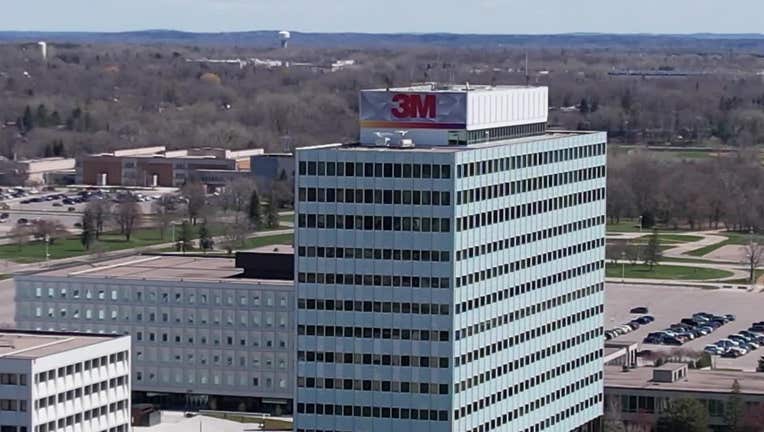
3M headquarters. (FOX 9)
TRAVERSE CITY, Mich. (AP) - Twenty-two attorneys general urged a federal court Wednesday to reject a proposed $10.3 billion settlement over contamination of U.S. public drinking water systems with potentially dangerous chemicals, saying it lets manufacturer 3M Co. off too easily.
The deal announced in June doesn’t give individual water suppliers enough time to determine how much money they would get and whether it would cover their costs of removing the compounds known collectively as PFAS, said the officials with 19 states, Washington, D.C., and two territories. In some cases the agreement could shift liability from the company to providers, they said.
"While I appreciate the effort that went into it, the proposed settlement in its current form does not adequately account for the pernicious damage that 3M has done in so many of our communities," said California Attorney General Rob Bonta, leader of the multistate coalition.
3M spokesman Sean Lynch said the agreement "will benefit U.S.-based public water systems nationwide that provide drinking water to a vast majority of Americans" without further litigation.
"It is not unusual for there to be objections regarding significant settlement agreements," Lynch said. "We will continue to work cooperatively to address questions about the terms of the resolution."
The company, based in St. Paul, Minnesota, manufactures per- and polyfluorinated substances — a broad class of chemicals used in nonstick, water- and grease-resistant products such as clothing and cookware, as well as some firefighting foams.
Described as "forever chemicals" because they don’t degrade naturally in the environment, PFAS have been linked to a variety of health problems, including liver and immune-system damage and some cancers.
3M has said it plans to stop making them by the end of 2025.
Some 300 communities have sued 3M and other companies over water pollution from the compounds. A number of states, airports, firefighter training facilities and private well owners also have pending cases.
They have been consolidated in U.S. District Court in Charleston, South Carolina, where the proposed settlement was filed last month.
Although the company put its value at $10.3 billion, an attorney for the water providers said it could reach as high as $12.5 billion, depending on how many detect PFAS during testing the Environmental Protection Agency has ordered over the next three years.
The law firm representing the water providers did not immediately respond Wednesday to messages seeking comment.
EPA in March proposed strict limits on two common types, PFOA and PFOS, and said it wanted to regulate four others.
In addition to California, states urging Judge Richard Gergel to reject the deal included Arizona, Colorado, Connecticut, Hawaii, Maine, Maryland, Massachusetts, Minnesota, New Hampshire, New Jersey, New Mexico, New York, Pennsylvania, Rhode Island, Tennessee, Texas, Vermont and Wisconsin. Also opposed were Washington, D.C., Puerto Rico and the Northern Mariana Islands.
In a court filing, the attorneys general said it would force nearly all public water providers nationwide to participate unless they withdraw individually — even those that haven’t filed suits or tested for PFAS.
"Troublingly, they would have to make their opt-out decisions without knowing how much they would actually receive and, in many cases, before knowing the extent of contamination in their water supplies and the cost of remediating it," the officials said in a statement.
A provision in the proposed deal would shift liability from 3M to water suppliers that don’t opt out, the statement said. That could enable the company to seek compensation from providers if sued over cancer or other illnesses in PFAS-affected communities, it said.
"As such, the proposed settlement is worth far less than the advertised $10.5 billion to $12.5 billion," the attorneys general said.
The attorneys general did not take a position on a separate $1.18 billion deal to resolve PFAS complaints against DuPont de Nemours Inc. and spinoffs Chemours Co. and Corteva Inc.

3M laying off 1,100 people at Maplewood HQ
3M is laying off more than 1,000 people at its Maplewood headquarters, according to a WARN notice dated May 1.