

Colorado becomes 2nd state to decriminalize psychedelic mushrooms

DENVER - Colorado voters have passed a ballot initiative to decriminalize psychedelic mushrooms for people 21 and older and to create state-regulated "healing centers" where patients can experience the drug under supervision.
Colorado becomes the second state, after Oregon, to vote to establish a regulated system for substances like psilocybin and psilocin, the hallucinogens found in some mushrooms. The initiative, which would take effect in 2024, also will allow an advisory board to add other plant-based psychedelic drugs to the program in 2026.
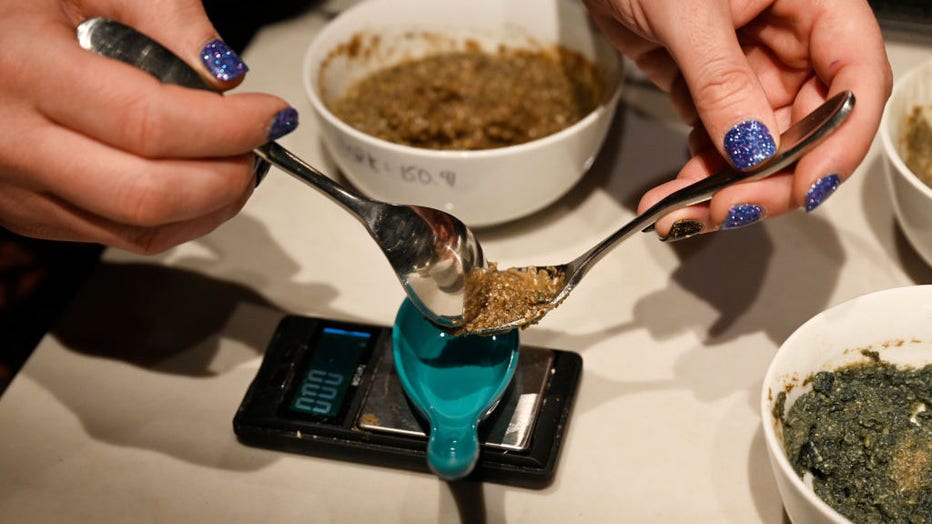
FILE - A person measures out a precise amount of psilocybin mushrooms during a ceremony on Nov. 6, 2021, in Denver, Colorado. (Photo by Andy Cross/MediaNews Group/The Denver Post via Getty Images)
Supporters argued that the state’s current approach to mental health has failed and that naturally occurring psychedelics, which have been used for hundreds of years, can treat depression, PTSD, anxiety, addiction and other conditions. They also said jailing people for the non-violent offense of using naturally occurring substances costs taxpayers money.
Critics warned that the Food and Drug Administration has not approved the substances as medicine. They also argued that allowing "healing centers" to operate, and allowing private personal use of the drugs, would jeopardize public safety and send the wrong message to kids and adults alike that the substances are healthy.
The move comes a decade after Colorado voted to legalize recreational marijuana, after initially allowing its use for medical reasons, which led to a multibillion-dollar industry with hundreds of dispensaries popping up across the state.
Critics of the latest ballot initiative say the same deep-pocketed players who were involved in legalizing recreational marijuana are using a similar playbook to create a commercial market, and eventually recreational dispensaries, for dangerous substances.
Voters in this week's midterm elections approved recreational marijuana in Maryland and Missouri but rejected it in two other states, signaling support gradually growing for legalization even in conservative parts of the country.
The results mean that 21 states have approved marijuana’s recreational use.
Under the measure, the psychedelics that would be decriminalized are listed as schedule 1 controlled substances under state and federal law and are defined as drugs with no currently accepted medical use with a high potential for abuse.
Even so, the FDA has designated psilocybin a "breakthrough therapy" to treat major depressive disorder. The designation can expedite research, development and review of a drug if it might offer substantial improvements over existing treatments.
RELATED: Synthetic 'magic mushroom' drug may ease depression in hard-to-treat patients, study says
Colorado’s ballot initiative would allow those 21 and older to grow, possess and share the psychedelic substances but not sell them for personal use. It also would allow people who have been convicted of offenses involving the substances to have their criminal records sealed.
In 2020, Oregon became the first state in the nation to legalize the therapeutic, supervised use of psilocybin after 56% of voters approved Ballot Measure 109. But unlike the Colorado measure, Oregon allows counties to opt out of the program if their constituents vote to do so.
Oregon’s initiative is expected to take effect at the beginning of next year.
Washington, D.C., and Denver have partially decriminalized psychedelic mushrooms by requiring law enforcement officers to treat them as their lowest priority.