

Deadly flash flooding at Grand Canyon exacerbated by burn scars
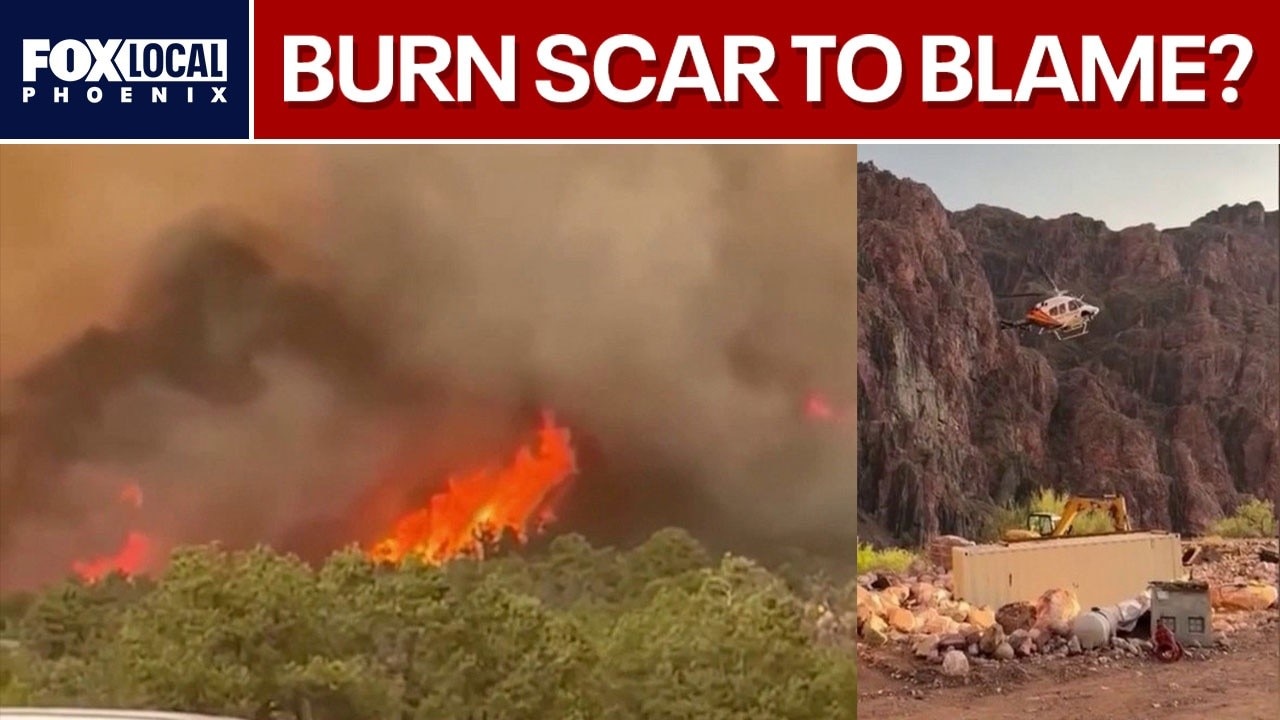
Grand Canyon flooding: Dry soil, burn scars from Dragon Bravo fire may have played a role
Flash floods in the Grand Canyon killed multiple people after heavy monsoon rains. FOX 10's Taylor Wirtz learns how damaged soil from the Dragon Bravo fire may have contributed to the deadly floods.
GRAND CANYON, Ariz. - Experts believe multiple factors caused Saturday's flash floods, including the burn scar left by last year's Dragon Bravo Fire.
What we know:
Widespread showers and thunderstorms swarmed areas in and around the Grand Canyon on Aug. 29. At least two people were killed, including a Texas chiropractor visiting the Grand Canyon with two of his friends, who are still missing, according to the three families. About 62 individuals were airlifted to safety.
Authorities on Monday night said after reporting about 15 people were missing, they said now one person is considered missing.
"There was actually four rounds of storms that dropped rainfall over the southern portions of the Dragon Bravo fire scar, as well as the Bright Angel Creek and Phantom Creek drainages," National Weather Service Flagstaff Meteorologist Robert Rickey said.
The National Weather Service says the first three rounds saturated the ground, but it was the fourth round around 2:30 p.m. that brought the heaviest rain.
By the numbers:
"They dropped anywhere between about a half inch to a little over an inch in about 30 minutes. So very heavy rainfall," Rickey said.
"Ultimately, that is what sent the cascades of ash and debris-ridden runoff down the canyon and along the North Kaibab Trail and into Phantom Ranch."
The flash flooding killed multiple people and resulted in dozens of air rescues.
Featured
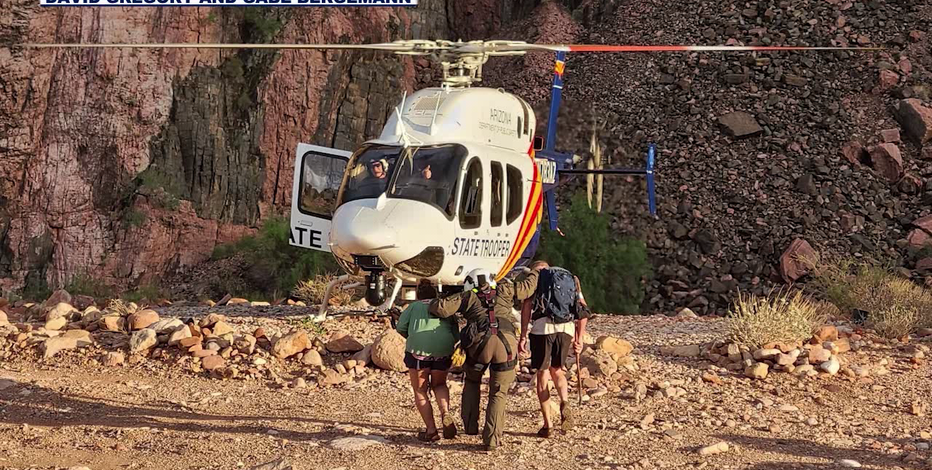
Flash floods hit Grand Canyon: 2 dead, 15 missing
Rescuers search for roughly 15 missing hikers after Grand Canyon flash floods leave at least two dead. Over 60 people were airlifted to safety as pipeline damage forces hotel closures.
Climate Impact:
Arizona State University Climatologist Emerita Erinanne Saffell says the dry Arizona soil is also to blame.
"When we get a lot of those bigger droplets all at once, that's more than what the soil can handle. And so, instead of going into the ground, it runs off," Saffell said.
She says burn scars, like the one left behind from the Dragon Bravo wildfire, can also keep the rain from seeping in.
"They can actually burn the soil. And when they burn the soil, the precipitation, the droplets aren't going to be able to go in, and instead they run off," Saffell said.
Wildfires also burn up vegetation, meaning crucial plants are no longer there to catch the water.
"The trees and the bushes capture that precipitation and let it ease down into the ground nice and easy," Saffell said.
What you can do:
With monsoon season still underway, officials urge hikers to always check weather and trail conditions before heading anywhere into the canyon.
The National Park Service is still asking for the public’s help. If anyone knows of hikers or backpackers who were in the inner canyon along the Bright Angel Creek corridor on Saturday, reach out to the National Park Service at 888-653-0009 or nps_isb@nps.gov.
"If you know of hikers/backpackers who were in the Bright Angel Creek corridor Aug. 29—or had a campground reservation there—please contact NPS Investigative Services Branch," NPS said. "This includes those who may have been on the North Kaibab Trail between the trailhead and Phantom Ranch, at Bright Angel Campground, or in "the Box" north of Phantom Ranch."
The Source: Information in this report was gathered from the National Weather Service in Flagstaff, a meteorologist, an Arizona State University Climatologist, and previous FOX 10 reports.