

DNA, trail cameras reveal new secrets about endangered jaguars roaming southern Arizona
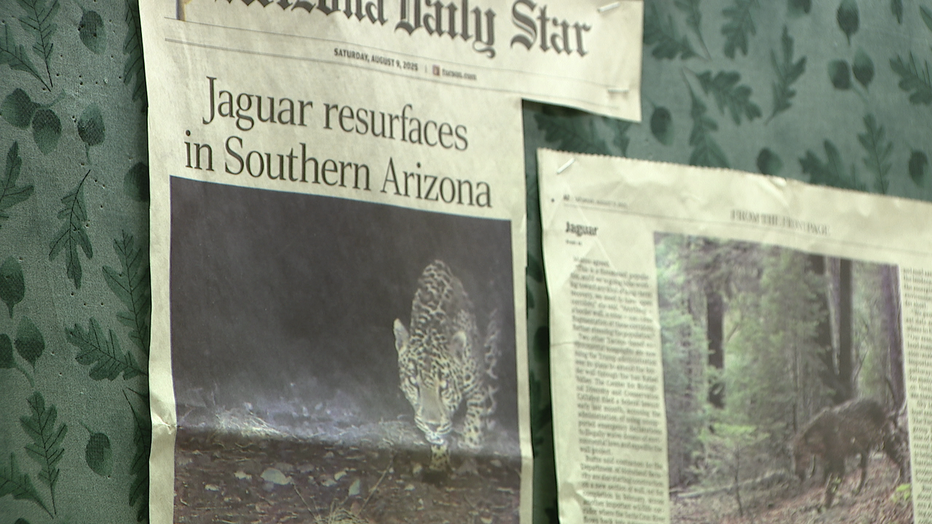
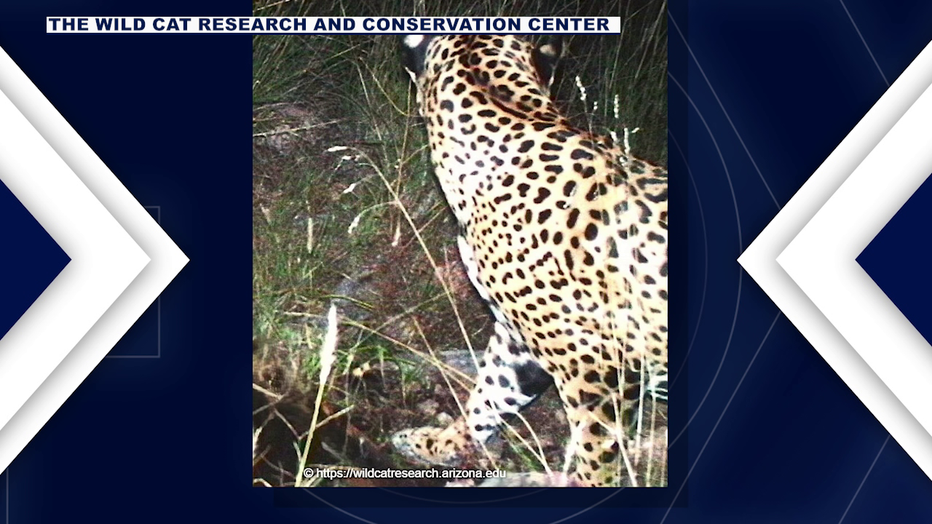
For 15 years, researchers at the University of Arizona’s Wild Cat Research and Conservation Center have been traveling through mountain ranges southeast of Tucson, using tools like cameras to track jaguars.
A field team recently provided a FOX 10 crew with a look at their work on the landscape.
What we know:
"Are there any jaguars on the landscape anymore or are they gone from this region?"
That's the question researchers set out to answer when the U.S. Fish and Wildlife Service agreed to fund an initiative in 2011 centered around jaguar monitoring near the Arizona and Mexico border.
"Within about a month of starting that project, we discovered our first jaguar on the landscape," said Susan Malusa, director of the University of Arizona Wild Cat Research and Conservation Center.
That jaguar, known as El Jefe by some and the Santa Rita jaguar by others, was the first of five total male jaguars to be detected in the past 15 years through the project.
Tracking them requires meticulous planning. The project's 120 trail cameras get checked every couple months. Before cameras are even placed, the team looks at satellite imagery to determine variables like elevation, vegetation, food sources, and connectivity.
"Does this connect to another Sky Island, go through some grasslands, back up? Jaguars have really large ranges, and they need space," Malusa said.
The cameras are spread across more than a dozen mountain ranges near the Mexico border. During a recent field day to check one of the easier-to-reach cameras, no jaguars were caught on video. However, a bear popped up in the very first frame.
Researchers and volunteer citizen scientists monitor 120 trail cameras across southern Arizona mountain ranges to uncover new data on endangered jaguars.
Dig deeper:
Since mid-June, several bear sightings—including some getting a quick dip in the puddles—have been recorded along with pumas and coati, a smaller animal in the raccoon family considered a delicacy for predators like jaguars. Monitoring prey populations is just as critical as tracking the cats.
"We look at how many are present on the landscape, and so the coati, we’re not seeing a dip. They’re doing just fine," Malusa said.
With so many cameras to check and so much space to cover, the program has brought on citizen scientists over the years, including Liz Taylor.
"That first jaguar is burned in my brain," Taylor said.
When Taylor and her husband retired from University of Arizona administration, they jumped at the chance to get outside. But it required strict vetting due to the highly sensitive location data.
"They had to know that we could drive safely, that we could be accountable, that we could critically think in the field and know if the camera’s doing this, we need to do that, or we need to make sure we’re making the environment conducive to the data that we’re gathering, and that we can be responsible to get the data back," Taylor said.
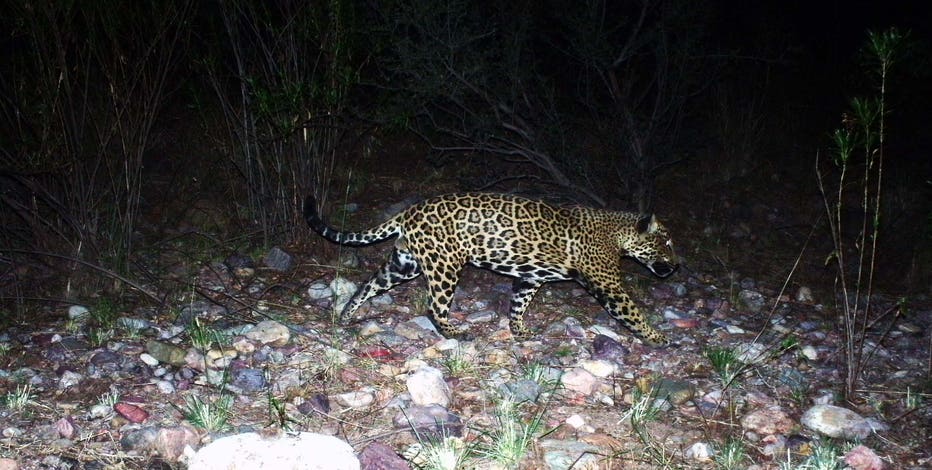
'El Jefe': Famous southern Arizona jaguar spotted for first time in 7 years
"El Jefe" was spotted in Sonora, Mexico, about 120 miles south of his last recorded sighting in Arizona, the Center for Biological Diversity announced.
Big picture view:
Now, a decade later, Taylor is teaching the latest cohorts of citizen scientists.
"It’s hard work though, man. It takes a lot," Taylor said.
Just ask Dobby, Taylor's hiking buddy, who fell asleep briefly during the hike. But these days in the field, while sometimes strenuous, never get old.
"What excites me is what I’m doing right now, sitting in the woods, with my dog, with my husband and knowing all of these creatures have gone through," Taylor said.
Creatures like Jaguar #3, which is the one she spotted on a camera several years ago.
"What I did after I screamed and everyone looked at the picture, I went over there, this may sound cornball, but I stood where he stood. And it still brings a little bit of a heartbeat, I mean it’s like holy crap, it almost makes me cry even to this day," Taylor said.
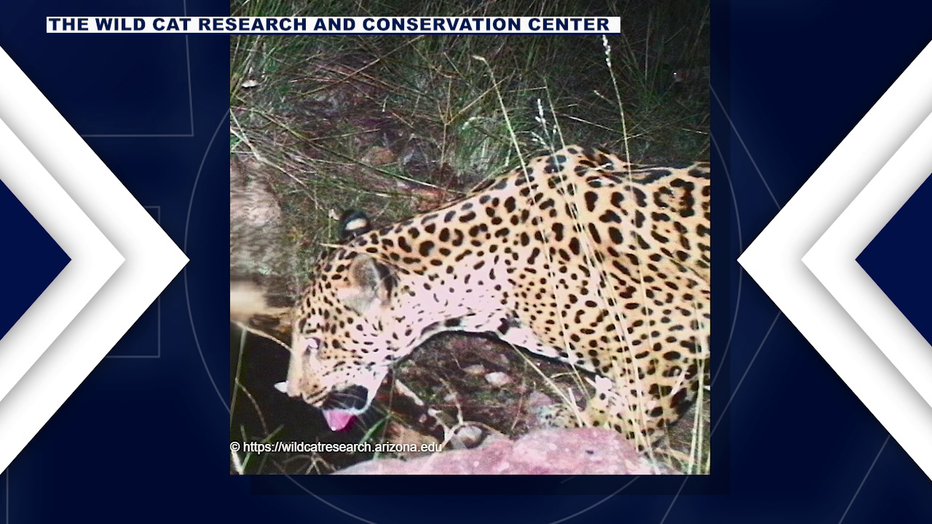
The citizen scientist program is crucial to the center’s work.
"Our age range at one point was 8 to 80 for volunteers. We have 50 citizen scientists who participate. Their dedication is a wonderful part of this project," Malusa said.
So is interest from the next generation of scientists, including Laurel Froehlich.
"It feels like home when I’m out here," Froehlich said.
Froehlich knows all about the project, because Susan is her mom.
She's been coming out to the mountains to track jaguars since she was eight years old.
"It felt like Christmas morning every time I knew that there was a field day coming up. I’d get all excited, I’d put on my little outfit, be like I’m ready to go, my little hiking boots, and I’d be like just following behind my mom. It’s just been so incredible, and it inspired me to go into environmental science," said Froehlich, who is now the lead genetics research technician on the project.
During the hike, Froehlich checked for spots to do a sediment sample. The area is usually a great water source, but it was too dry during the visit. However, that is not a huge issue.
"Sediment kind of works as like a time capsule, so it holds DNA, which is super awesome, because you might be like, oh there’s no water here, but if the water passed through here, DNA can get trapped in here and held," Froehlich said.
Meaning a jaguar could have drunk from a stream at the site or further up the mountain, and Froehlich can tell by the DNA. All she needs to do is dig about an inch into the sediment and take a stopper's worth back to the lab. A bonus for the team — the work is non-invasive.
"We don’t take anything with us from the site besides that little filter, so all this water that I would’ve collected goes right back into the water; minimal disturbance," Froehlich said.
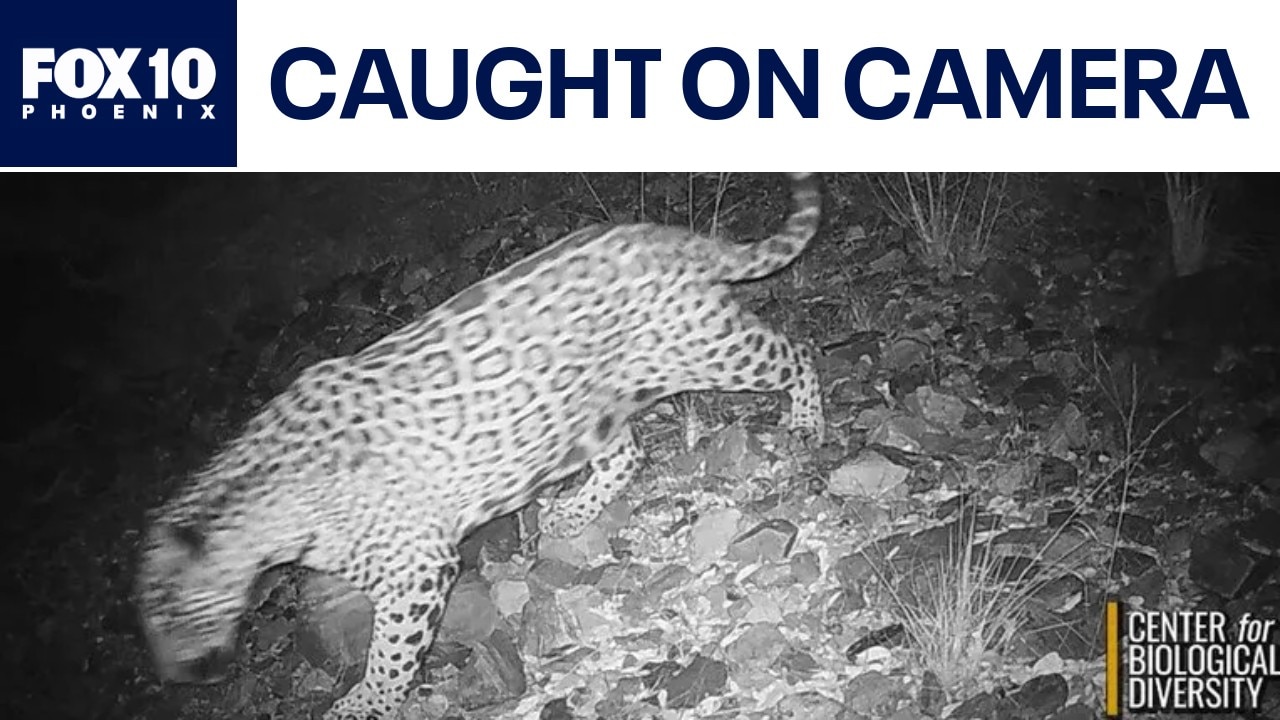
Rare jaguar spotted in southern Arizona
A rare jaguar is spotted once again on video in southern Arizona, and one wildlife expert says this is the biggest jaguar he has ever seen on camera.
What's next:
The results teach so much about Arizona's ecosystem. Take Cinco, for example, the latest jaguar detected late last fall.
"Cinco is showing us that jaguars can not only just pass through but take up residence here and thrive," Malusa said. "The fourth jaguar was detected only a couple months before the fifth jaguar, so to see those detections of individual jaguars close together is very promising."
Years of data prove these cats are following ancestral paths. The scientists call it site fidelity—an animal's tendency to return to a previously visited or occupied location, even generations after the original cats roamed there.
"This jaguar had never been there, but a previous jaguar had, and then we see it going to previous sites that other jaguars had been to," Malusa said.
But to save this endangered species, the dispersing males need females to follow them. That requires keeping these vital corridors open.
"The core population is in Mexico, that’s where the breeding population is. When opportunities arise for perhaps creating openings for large mammals like jaguars for that connectivity further south and going into Mexico, we want to have a scientific database for where that should be, so our data collection is really critical, especially right now," Malusa said.
Malusa says the continuation of this multi-generational project relies on the good will of those who believe in its importance.
"We do get some grants, and we continue to do reports and publish our reports for people to see and to keep these cameras going and to have an uninterrupted data set is really important to the science, and we can only do that with people donating to the project," Malusa said.
What you can do:
Donations can be made online through the Wild Cat Research and Conservation Center website.