

Deadliest day of Israeli strikes leads to negotiations "as soon as possible"
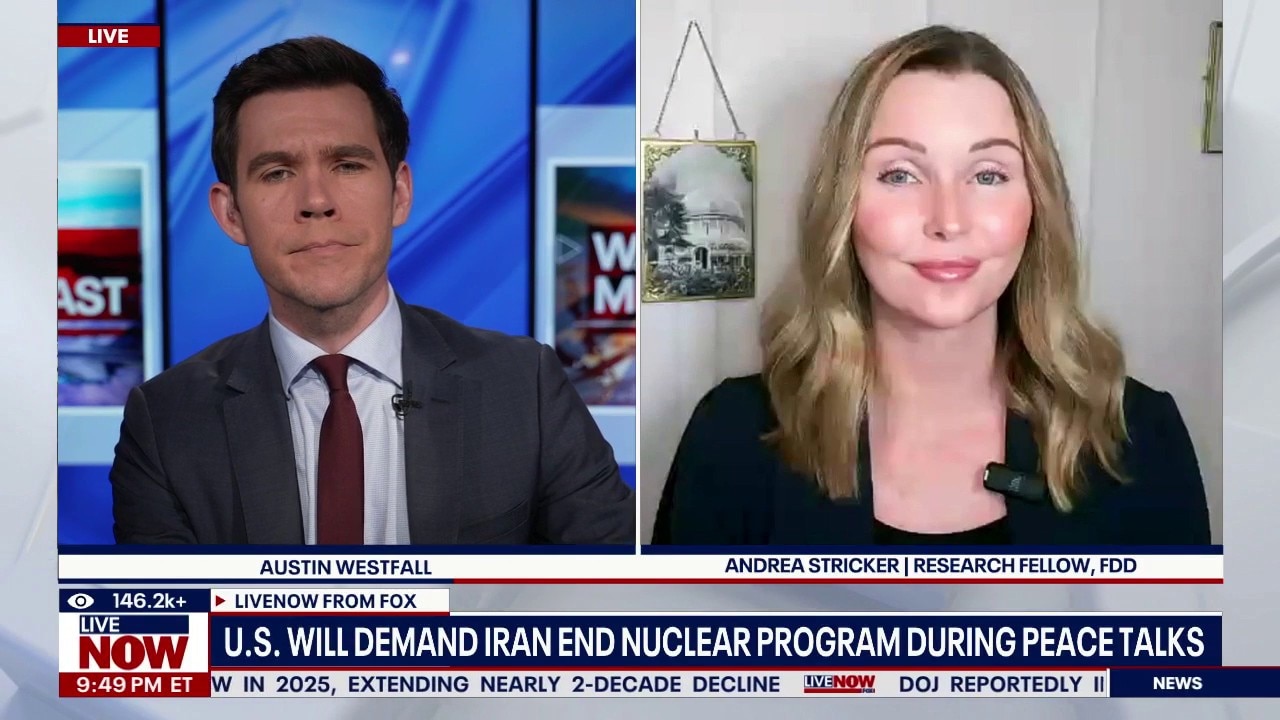
US sets nuclear demand for Iran peace talks
We are watching as President Donald Trump says that Iran must not have the ability to build nuclear weapons and the Strait of Hormuz must be open and safe if an ongoing ceasefire is to be taken seriously moving forward. President Trump posted on social media saying that military personnel and equipment will stay in the region "until such time as the REAL AGREEMENT reached is fully complied with." LiveNOW’s Austin Westfall is speaking with Andrea Stricker, the deputy director of FDD's Nonproliferation Program and an FDD research fellow.
A tentative ceasefire in the war with Iran began to unravel as Israel continued intense bombing in Beirut and Iran maintains a hold on the Strait of Hormuz.
Both Iran and U.S. have declared victory with the announcement of the ceasefire but pressure from either side continues.
The United States has maintained that the ceasefire must include the reopening of the Strait of Hormuz and the removal of Iran's stockpile of enriched uranium. There remains questions about whether Lebanon is included.
In-person talks between the U.S. and Iran are scheduled to take place this weekend in Pakistan.
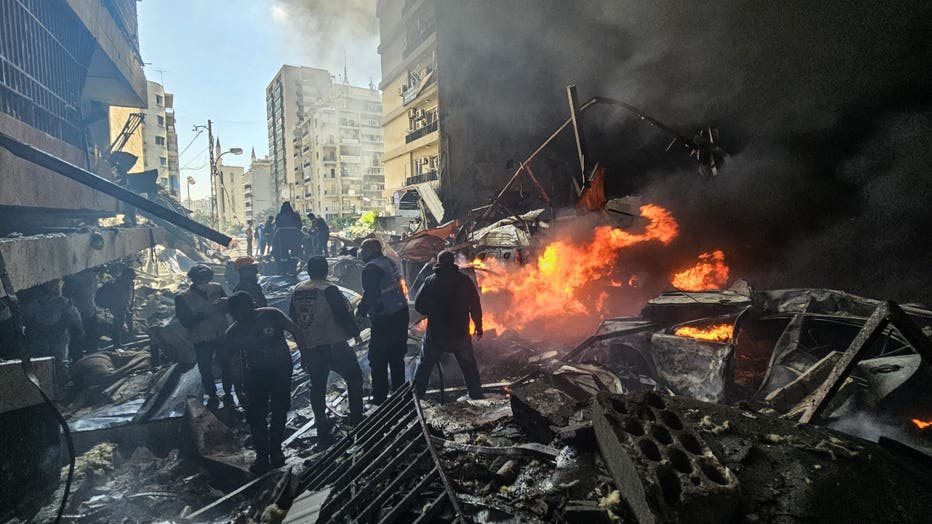
TOPSHOT - First responders stand amid rubble at the site of an Israeli airstrike in Beirut's Corniche al-Mazraa neighbourhood on April 8, 2026. (Photo by AFP via Getty Images)
Here’s a look back at what happened on Thursday:
Ships are moving through the strait
8:56 p.m. ET: Tankers appear to be moving through the Strait of Hormuz, according to Kpler, which collects ship-tracking data.
Trump says Iran doing ‘very poor job’ of allowing oil through the Strait of Hormuz
6:45 p.m. ET: President Donald Trump appeared to be cast doubt on the effectiveness of the ceasefire that has halted the Iran war.
"Iran is doing a very poor job, dishonorable some would say, of allowing Oil to go through the Strait of Hormuz," he wrote on his social media site Thursday evening. "That is not the agreement we have!"
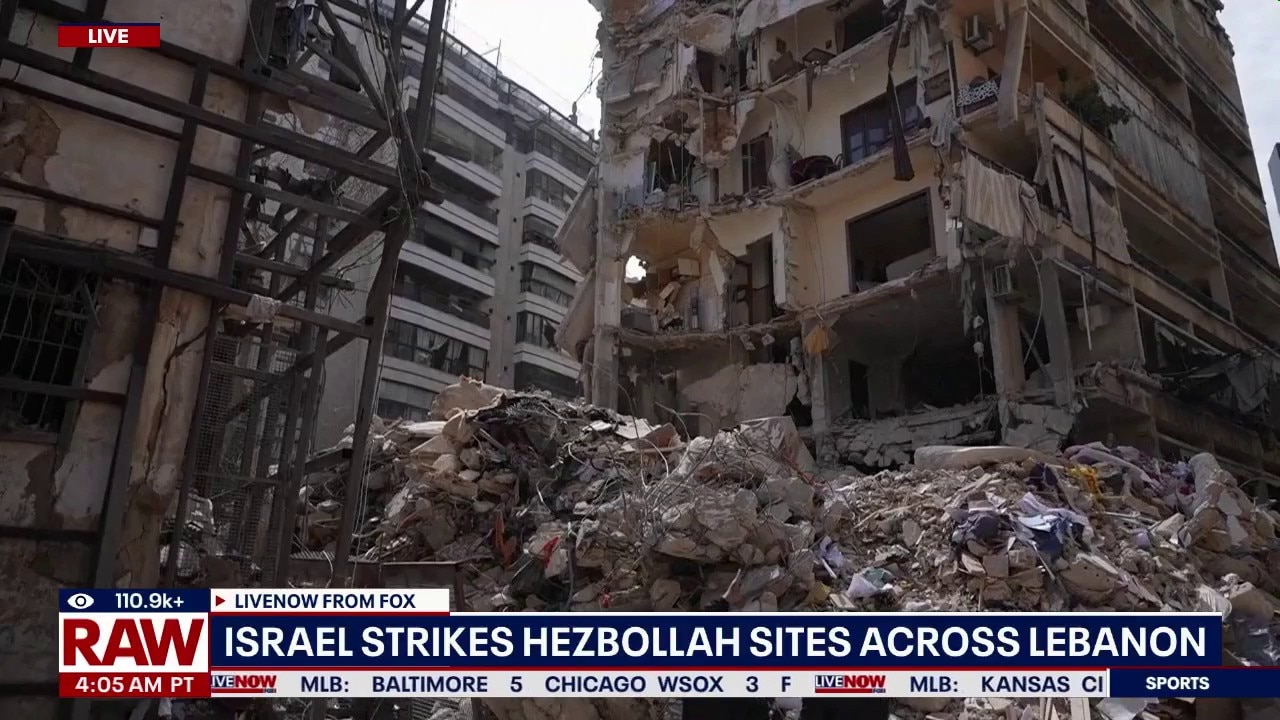
Israel strikes Hezbollah sites across Lebanon
Israeli strikes hit busy commercial and residential areas in central Beirut without warning on Wednesday, hours after a ceasefire was announced in the U.S.-Israeli war with Iran. President Donald Trump has said that Lebanon was not included in the ceasefire deal because of the Lebanese militant Hezbollah group.
The post came after Trump posted earlier that "There are reports that Iran is charging fees to tankers going through the Hormuz Strait — They better not be and, if they are, they better stop now!"
Israel to negotiate with Lebanon "as soon as possible"
3:30 p.m. ET: Israeli Prime Minister Benjamin Netanyahu has authorized direct negotiations with Lebanon "as soon as possible" to find a solution to disarm Hezbollah.
Netanyahu spoke with President Trump, and the two agreed to dial back Israel's military campaign in Lebanon before the in-person peace talks in Pakistan.
Early on Thursday, Netanyahu released a video message saying there is no ceasefire in Lebanon. With hundreds of strikes throughout the day, Thursday was the deadliest day of Israeli strikes since the war began. Over 300 people have been killed and 1,150 have been wounded.
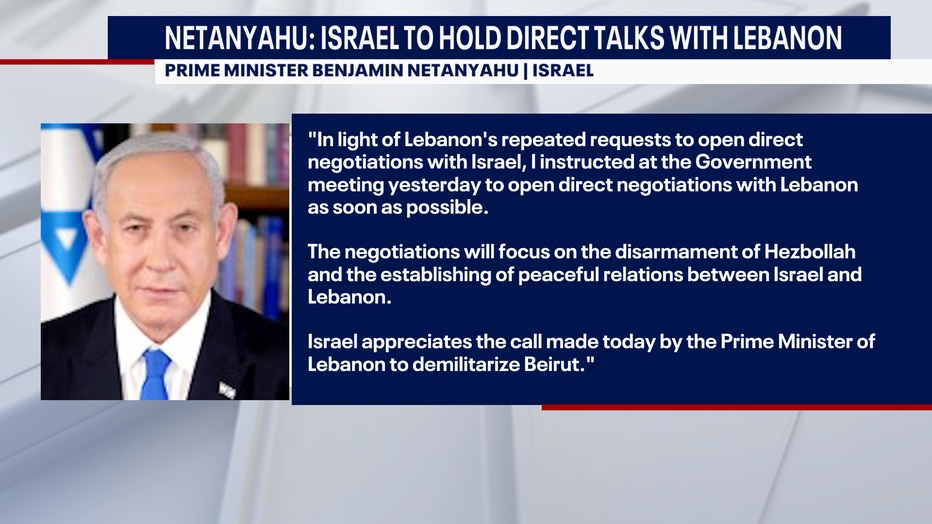
Israeli Prime Minister Benjamin Netanyahu
Iran war could have a bigger impact on shipping than COVID
2:55 p.m. ET: ALIS, an Italian logistics services association, says that ships are forced to change routes because of the risk associated with traversing the Strait of Hormuz. Trips take 14 days longer on average.
This is causing a ship's value to increase, along with insurance costs, by about 10% since the time of the war.
The group's vice president, Marcello Di Caterina, said the war in Iran could hurt the whole shipping sector harder than the COVID-19 pandemic.
House effort to limit Trump's war powers fails to advance
1:05 p.m. ET: House of Representatives Democrats attempted to pass a bill that would force President Trump to get approval from Congress before taking any further action in Iran. The resolution did not pass.
During the short "pro forma session", multiple representatives still voiced their opposition.
President Trump slams NATO amid war with Iran
10:20 a.m. ET: President Trump took to Truth Social to criticize NATO as tensions with Iran continue. He's accused the alliance of being unhelpful throughout the conflict.
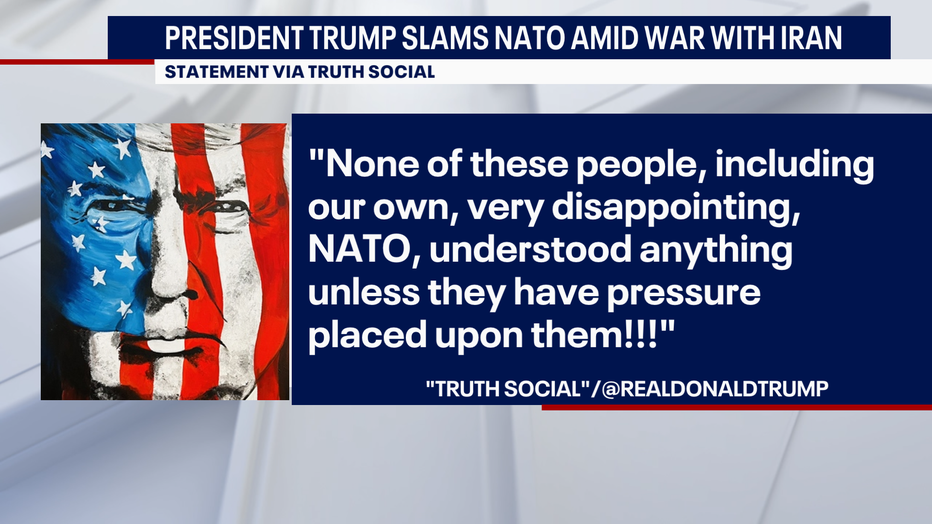
President Trump via Truth Social
"Iran has suffered a generational military defeat"
8:45 a.m. ET: Head of the U.S. Central Command, Navy Adm. Brad Cooper said Iran has suffered "a generational military defeat," in a video message released Thursday.
"The United States and Israel systematically destroyed Iran’s ability to conduct large-scale military operations for years to come," Cooper said.
He added in the message his forces will "remain present" in the Middle East as the two-week ceasefire has taken effect.
Trump promises troops will remain in the region
6:25 a.m. ET: President Donald Trump posted to Truth Social saying that military personnel and equipment will stay in the region "until such time as the REAL AGREEMENT reached is fully complied with."
In the post, Trump also reiterated that Iran must not have the ability to build nuclear weapons and the Strait of Hormuz must be open and safe.
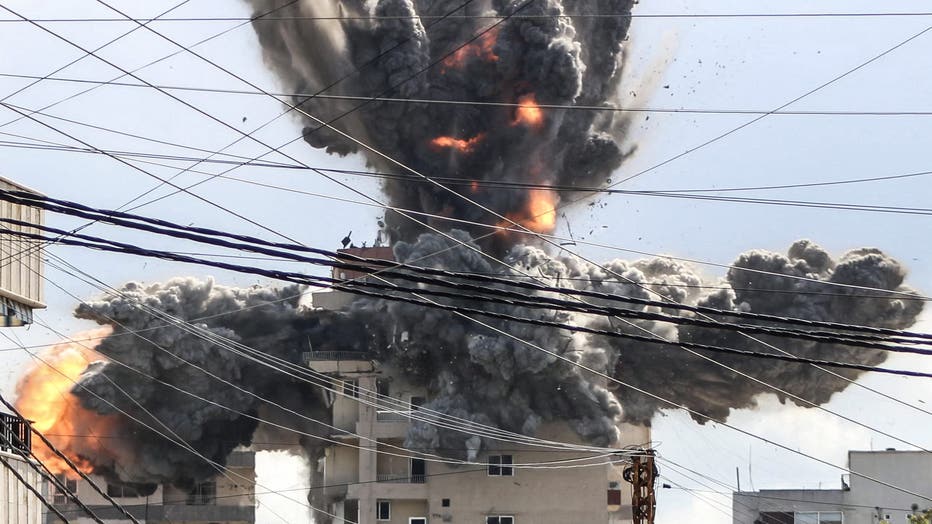
TOPSHOT - A fireball rises from a building hit by an Israeli airstrike in the area of Abbasiyeh, on the outskirts of the southern Lebanese city of Tyre, on April 8, 2026. (Photo by Kawnat HAJU / AFP via Getty Images)
2-week ceasefire deal details remain unclear
Dig deeper:
Despite striking a ceasefire deal that would postpone strikes for two weeks, finer details of the deal remained unclear Wednesday.
The Trump administration demanded that the Strait of Hormuz be reopened as a condition of the deal, Iranian state media reported that the passage was "fully closed," according to The New York Times. The closure was in response to continued Israeli attacks in Lebanon.
Iranian Foreign Minister Abbas Araghchi insisted that an end to the war in Lebanon was part of the ceasefire deal, but Israeli Prime Minister Benjamin Netanyahu and U.S. President Donald Trump said the truce did not cover Lebanon.
When the deal was announced, Pakistan's prime minister, whose country served as a mediator, said in a social media post that it applied to "everywhere including Lebanon and elsewhere."
Only 11 vessels moved through the strait Wednesday, roughly the same as in prior days, according to Windward, a maritime intelligence firm.
Iran was requiring shippers to pay tolls of up to $1 a barrel for outbound oil, it said. The largest supertankers carry up to 3 million barrels of crude.
The Source: Information for this article was taken from The Associated Press and The New York Times. This story was reported from San Jose and Orlando.