

Regular mammograms for women should start at 40, not 50, US health panel recommends

Inflammatory breast cancer: Rare, yet deadly, and the signs are 'not subtle'
Dr. Ko Un Park, a surgical oncologist at OSU’s Comprehensive Cancer Center, discusses the signs of inflammatory breast cancer, treatment, and other things to know about the rare, yet deadly form of the disease.
Women should start getting every-other-year mammograms at age 40 instead of waiting until 50, according to a draft recommendation from a federal task force.
The U.S. Preventive Services Task Force has long said women can choose to start breast cancer screening as young as 40, with a stronger recommendation that they get the X-ray exams every two years from age 50 through 74.
Tuesday’s update -– if the draft proposal is finalized -– would mark a shift in the influential panel’s guidelines although it's not likely to end confusion. Other health groups differ over when and how often to screen.
"This new recommendation will help save lives and prevent more women from dying due to breast cancer," said former task force chair Dr. Carol Mangione.
The task force noted that Black women are 40% more likely to die of breast cancer than white women, making mammograms at 40 an especially important step -– but also urged more research to better understand and combat the disparity.
The task force also noted that nearly half of all women have dense breasts, which means mammograms may not work as well, and called for more research into whether additional types of testing would help.
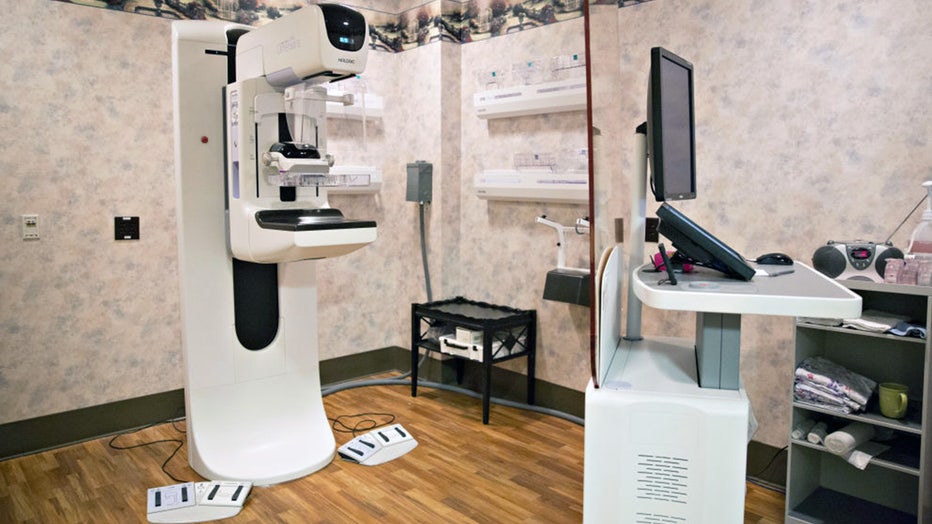
FILE - A Hologic Inc. Selenia Dimensions mammography machine sits in an exam room at Perry Memorial Hospital in Princeton, Illinois, U.S., on Friday, Sept. 1, 2017. (Daniel Acker/Bloomberg via Getty Images)
The draft recommendation applies to women at average risk of breast cancer but not those at very high risk due to certain genetic or other factors. It is open for public comment through June 5, after which the task force will decide whether to finalize it.
While cancer deaths have been declining for years, breast cancer remains the second leading cancer killer of U.S. woman, behind lung cancer.
Health organizations have long had different screening recommendations, seeking to balance catching breast cancer early while avoiding too many false alarms, when the X-rays spot non-cancerous blips.
The American Cancer Society says women ages 45 to 54 should get mammograms every year -– but can choose to start at 40 and then at 55, can choose to switch to every other year.
The American College of Radiology recommends annual mammograms starting at 40 for women at average risk of breast cancer -– but urges that young women get assessed for risk factors that require even earlier screening.
___
The Associated Press Health and Science Department receives support from the Howard Hughes Medical Institute’s Science and Educational Media Group. The AP is solely responsible for all content.