Flood Watch
from SAT 11:00 PM MST until MON 5:00 AM MST, Eastern Cochise County below 5000 ft including Douglas/Wilcox, Upper Gila River and Aravaipa Valleys including Clifton/Safford, Southeast Pinal County including Kearny/Mammoth/Oracle, Western Pima County including Ajo/Organ Pipe Cactus National Monument, Dragoon/Mule/Huachuca and Santa Rita Mountains including Bisbee/Canelo Hills/Madera Canyon, Tucson Metro Area including Tucson/Green Valley/Marana/Vail, Tohono O'odham Nation including Sells, Baboquivari Mountains including Kitt Peak, Upper San Pedro River Valley including Sierra Vista/Benson, Chiricahua Mountains including Chiricahua National Monument, Galiuro and Pinaleno Mountains including Mount Graham, Santa Catalina and Rincon Mountains including Mount Lemmon/Summerhaven, White Mountains of Graham and Greenlee Counties including Hannagan Meadow, South Central Pinal County including Eloy/Picacho Peak State Park, Upper Santa Cruz River and Altar Valleys including Nogales, Northwest Plateau, Lake Havasu and Fort Mohave, North Phoenix/Glendale, Aguila Valley, Mazatzal Mountains, Tonopah Desert, Gila Bend, San Carlos, East Valley, Northwest Pinal County, Northwest Valley, Southeast Valley/Queen Creek, Globe/Miami, Deer Valley, Fountain Hills/East Mesa, Apache Junction/Gold Canyon, Buckeye/Avondale, Tonto Basin, Rio Verde/Salt River, South Mountain/Ahwatukee, Dripping Springs, Southeast Gila County, Pinal/Superstition Mountains, Scottsdale/Paradise Valley, New River Mesa, Sonoran Desert Natl Monument, West Pinal County, Superior, Cave Creek/New River, Central Phoenix, Yavapai County Mountains, Little Colorado River Valley in Navajo County, Western Mogollon Rim, Coconino Plateau, Yavapai County Valleys and Basins, Oak Creek and Sycamore Canyons, Grand Canyon Country, Little Colorado River Valley in Coconino County, Marble and Glen Canyons, Northern Gila County, White Mountains, Kaibab Plateau, Eastern Mogollon Rim, Little Colorado River Valley in Apache County

Scientists grow 5 strawberry varieties resistant to deadly fungal disease
Published April 24, 2023 12:36 PM MST

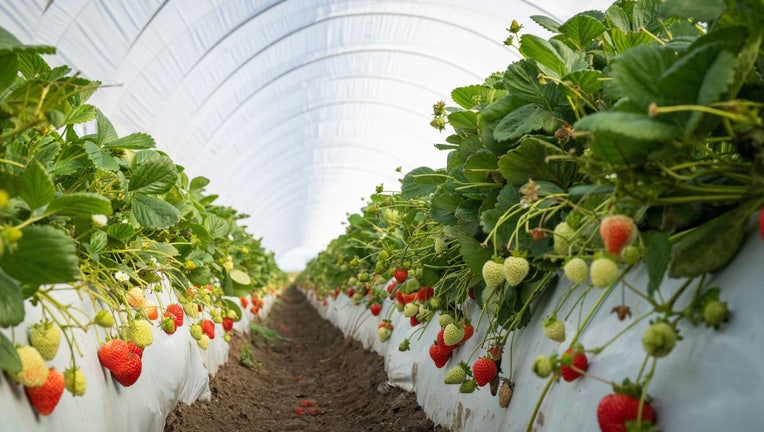
UC Eclipse strawberries grown in Santa Maria, California (Credit: Jael Mackendorf/UC Davis)

A deadly fungal disease impacting strawberries has led to the development of new strawberries to help preserve crops.

Scientists from the University of California Davis Strawberry Breeding Program are creating five new strawberry varieties resistant to Fusarium wilt, which causes crop loss, the school said in a release. 

The university says these new strawberries are Eclipse, UC Golden Gate, UC Keystone, UC Monarch, and UC Surfline. 

RELATED: Strawberry outlook deemed ‘promising’ despite impacts from hurricanes, atmospheric rivers

Eclipse is a "summer plant" grown during the fall and winter. UC Golden Gate and UC Keystore are "day neutral" and grow during the summer on roughly 60% of strawberry farms in California, UC Davis notes. UC Surfline and UC Monarch are resistant to organisms that cause disease.  

The new strawberry types each have improved flavor and characteristics for year-round growth in California, where roughly 1.8 billion pounds of the fruit are harvested annually, according to a UC Davis release.
Scientists-develop-new-strawberries.jpg

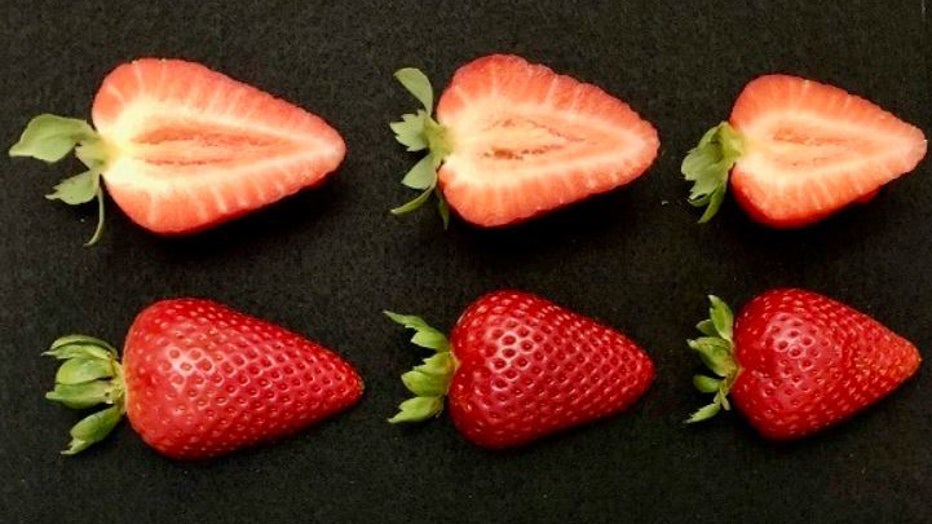
A harvested UC Keystone strawberry grown in Santa Maria, California, is shown sliced in half. It’s resistant to Fusarium wilt, and produces high yields late in the season. (Credit: Cindy Lopez Ramirez/UC Davis)

Fusarium wilt became a problem for strawberry crops in 2005 when fumigant methyl bromide, a pesticide, was no longer used. UC Davis notes that bacteria in the soil caused concerns for farmers that Fusarium wilt could damage their strawberries. 

"The disease has taken off fast and we need to react quickly to address the need," Glenn Cole, a breeder and field manager with the UC Davis Strawberry Breeding Program, said in a statement.

Scientists from the breeding program continue to find ways to protect strawberry crops from disease. And a method the team is using involves collecting DNA from plants and creating genetic tools to determine which ones are resistant to Fusarium wilt. 

This story was reported from Washington, D.C. 


Food and DrinkWild NatureHealthU.S.News