

States with highest and lowest property tax burden
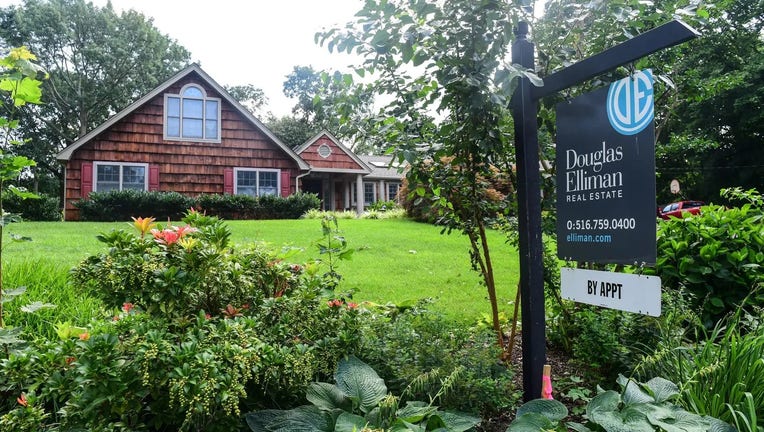
Photo of home for sale in Huntington, New York on August 5, 2020. (Photo by Thomas A. Ferrara/Newsday RM via Getty Images)
Property taxes are one of the most significant ongoing expenses homeowners face. The taxes are meant to fund local government services such as infrastructure, schools, and other essential systems.
The specific fee is calculated based on a home’s value and its location, though the amount can vary annually based on local tax laws and the home’s value. Typically, if someone's home is more valuable, they will owe more in property taxes. Home values are also re-evaluated as often as every year, which means property tax bills can change.
The issue facing many homeowners is that property taxes are growing due to increased home values and changes to local tax rates, Realtor.com senior economist Joel Berner said in an April report.
SEVERAL STATES SEEK END TO PROPERTY TAXES: SHOULDN'T HAVE TO 'RENT FROM THE GOVERNMENT
The median property in the U.S. saw its property tax bill grow by 2.8% from 2023 to 2024 as over 73% of properties had tax increases during that time. In 2024, the median tax bill in the U.S. was $3,500, which was largely driven by home price appreciation.
However, Berner said many homeowners may not realize they can protest their home's value assessment. In fact, over 40% of properties nationwide could save at least $100 by protesting the assessed value, with a median savings of over $500, according to Berner.
HOW ELIMINATING PROPERTY TAXES IN FLORIDA COULD AFFECT THE STATE'S REAL ESTATE MARKET
Such taxes have become a flashpoint among politicians, with some even calling for their complete elimination. One Pennsylvania lawmaker argued that homeowners shouldn’t have to "pay rent" to the government. Recently, Gov. Ron DeSantis doubled down on his goal of eliminating property taxes in Florida, a move that would make it the lone state in the country with no state income or property tax.
Residents in New Hampshire, New Jersey, Connecticut, Washington and New York face the highest median property tax amount, according to the most recent data from Realtor.com
GET FOX BUSINESS ON THE GO BY CLICKING HERE
Conversely, Indiana, Alabama, West Virginia and Arkansas residents have the lowest median property tax amount.
Here are the states in order from highest to lowest median property tax amount, according to Realtor.com:
- New Jersey – $9,413
- New Hampshire __ $7,715
- Connecticut – $6,944
- Washington – $6,338
- New York – $6,096
- Texas – $5,860
- California – $5,248
- Massachusetts-- $5,142
- Rhode Island-- $5,111
- District of Columbia – $5,087
- Maryland – $4,874
- Maine – $4,335
- Oregon – $4,265
- Alaska – $4,113
- Minnesota – $3,712
- Florida – $3,659
- Wisconsin – $3,612
- Colorado – $3,398
- Kansas – $3,379
- Pennsylvania – $3,137
- Montana – $3,072
- Hawaii – $2,931
- Ohio – $2,823
- Iowa – $2,816
- Utah – $2,768
- Virginia – $2,755
- Georgia – $2,683
- South Dakota – $2,632
- Missouri – $2,534
- North Dakota – $2,525
- Nebraska – $2,382
- Nevada – $2,316
- Vermont – $2,206
- Wyoming – $2,024
- Illinois – $1,974.5
- Idaho – $1,974
- North Carolina – $1,971
- Arizona – $1,956
- New Mexico --$1,734
- Delaware – $1,702
- Michigan – $1,670
- Kentucky – $1,551
- Oklahoma – $1,481
- Louisiana – $1,415
- Tennessee – $1,333
- South Carolina – $1,328
- Mississippi – $1,034
- Indiana – $99
- Alabama – $804
- West Virginia – $728
- Arkansas – $725