

Annual 'Day of the Dead' celebrations, once a Latin American phenomenon, gain popularity across the US
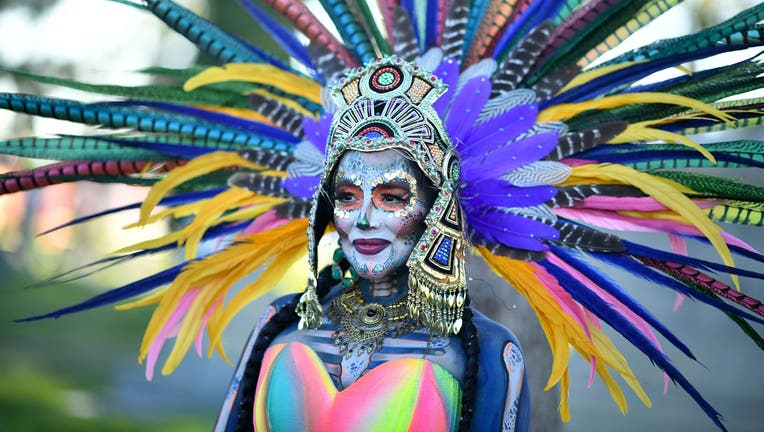
A person in costume attends Hollywood Forever Cemetery's 27th annual Dia De Los Muertos event in Los Angeles on October 24, 2026. (Photo by Chris DELMAS / AFP via Getty Images)
When the last of the trick-or-treaters get home on Halloween night, the next seasonal event, a two-day celebration called "Day of the Dead," kicks off the following morning.
The backstory:
Día de los muertos, which translates to "Day of the Dead," spans Nov. 1-2 each year. Each of the two days has a different focus. Day of the Dead honors the departed souls of loved ones who are welcome back for a few hours. Legend holds that when Halloween ends, at midnight on Nov. 1, the gates of heaven open. The spirits of children can rejoin their families for 24 hours. The spirits of adults can rejoin their families on Nov. 2.
Participants believe that the souls of the dead return to eat, drink, dance and play music with their loved ones.
The annual celebration’s roots trace back to rituals that honored the dead in pre-Columbian Mesoamerica some 3,000 years ago, according to History.com.
Many of the themes and rituals that have come to make up contemporary celebrations are mixtures of Latin American tradition and Roman Catholicism.
A mood of celebration, not sorrow.
Day of the Dead events feature bright colors, sounds and aromas. With skulls painted on their faces and bright costumes, people parade down streets and set up altars — known as ofrendas — to their dear departed.
Popular decorations include plastic marigold garlands and skulls made of sugar that have been painted in vibrant pinks, yellows, blues and greens. Marigolds are known as the "flower of the dead" and their scent is believed to attract the souls of the dead back into the land of the living.
But even though the decorations and costumes might sound similar, Día de los Muertos is not a Mexican equivalent of Halloween. Instead, it is a festive but sincere remembrance, connection, and celebration of the lives of those who came before us.
Families gather at the burial sites or their loved ones or at intricately built altars where they display photos of loved ones centered on skeleton figurines with bright decorations like plastic marigold garlands, candles, candy and other offerings such as the favorite foods of the departed. The sounds of mariachi music can be heard among the decorated markers at cemeteries during Day of the Dead.
It had been popular in Mexico, Guatemala, Brazil and parts of Ecuador, where bakers made sugar skulls and sweet "bread of the dead." Artists created elaborate paper cut-out designs for the altars.
Some families would even stay up all night at burial sites keeping vigil, waiting to greet the spirit of their loved ones.
Dig deeper:
The Chicano movement helped bring the celebration to the United States, according to Rutgers University journalism and media studies professor Regina Marchi. The term "Chicano" is a self-identifying moniker that Mexican Americans who consider themselves politically active in social justice issues have adopted, Rutgers said.
‘Day of the Dead’ comes to America
Chicano artists in the 1970s celebrated Mexican ritual in the U.S. in what Marchi described as "an act of political resistance as well as an act of cultural pride."
Interest in the cultural celebration began to grow as word spread. Today, San Antonio, Texas, and Los Angeles are considered among the best and largest destinations to celebrate the holiday, but from New York City to Fort Lauderdale to Chicago to Phoenix to San Francisco to Seattle to Anchorage, you can find events marking the occasion.
The Source: Information for this story came from the Associated Press, Reuters, Rutgers University, DaysoftheYear.com, History.com, VisitSanAntonio.com, and dayofthedead.holiday. This story was reported from Orlando.