

'Baby G' technology helping babies become more mobile
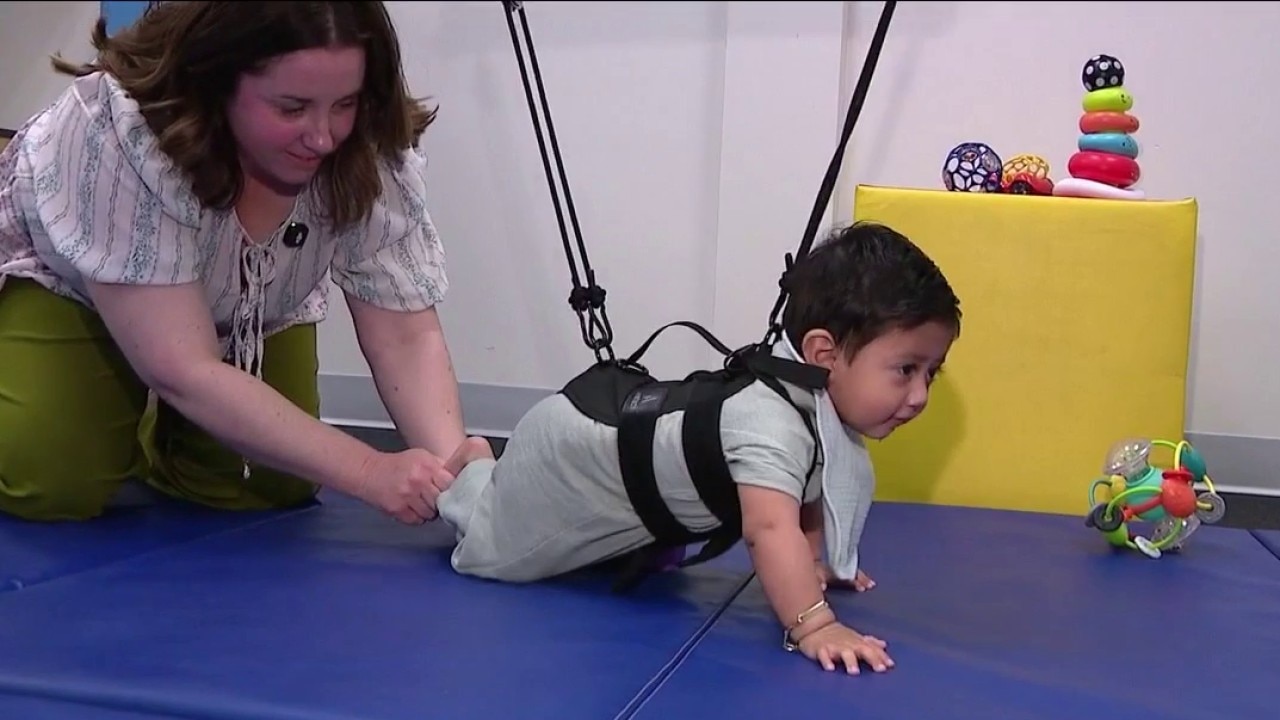
New Baby G technology helps babies become more mobile
United Cerebral Palsy of Central Arizona is the only clinic in the world offering new technology to help babies become more mobile. It's being used in therapy sessions, and it's something the center is proud to offer patients. FOX 10's Desiree Fluellen has more.
PHOENIX - The first step in a therapy session with the "Baby G" is picking the right harness size.
What they're saying:
"We want things to be pretty snug," said Brittany Landabazo, a pediatric physical therapist at United Cerebral Palsy of Central Arizona.
Landabazo has been working with 9-month-old Santiago and his mother, Samantha, for a few months. Santiago is learning how to roll over, crawl and pull to stand using the robotic technology behind the "Baby G" system.
"The ‘Baby G’ is a 3-D body weight support system that allows us to work on developmental milestones with kids. It was created for early mobilizations," Landabazo said.
According to UCP of Central Arizona, cerebral palsy is the most common motor disability children have.
"He's happy, he's screaming all day, every day, he loves his sister," said Samantha. "He's obsessed with his sister and his sister is obsessed with him."
Even through the family’s joy, Santiago’s mother noticed early signs that his mobility was off.
"Around two months, I noticed he wouldn’t turn his head to the right side," Samantha said. "Also, I noticed the rest of his left side. He wouldn’t untuck his arm. He wouldn’t unfist his hand and his left side toes were always curled up, and he wasn’t really moving anything and then when he started holding toys in his hand, he wasn’t holding anything with his left."
Landabazo says cerebral palsy is a motor disorder caused by brain damage that affects the communication from the brain to the muscles.
"It can affect your arms, your legs, both one side of your body, both sides of your body, depending on where the damage occurred," she explained.
The "Baby G" is for small children between 12 and 50 pounds. The harness system helps take off body weight while the child is guided through movement.
"It's already taken off automatically 2 pounds, so it's about 11% of his body weight," Landabazo explained. "It’s going to move right over him, and now he can move all within this 10-by-10 frame."
Almost immediately, Santiago took his first crawl.
"He does it here, and I bet you once we get home he’s going to start doing it," Samantha said.
Motivated by his mother and some toys, and with guidance from Landabazo, Santiago kept crawling, and he wasn't done there. He wanted to show our camera crew all he could do, including standing.
Until this point, "Baby G" had only been used for research. This is the only space in the world it's being used in a therapy setting. For Samantha and Santiago, it's been life-changing.
"He wasn’t rolling, he wasn’t sitting up, so I feel like I’ve noticed him rolling now, him sitting up, to him crawling, trying to stand now, so it’s been a big difference," Samantha said.
"As a therapist, it’s amazing," Landabazo said. "I get to see them be brave and confident and work on things that may be outside of the 'Baby G' are too challenging at the time, so it really changes how I do my treatment. He’s a really happy baby. He brightens my day."
The Source: FOX 10's Desiree Fluellen gathered information and interviews for this story.