

Spanish scientists cure pancreatic cancer in mice in medical breakthrough
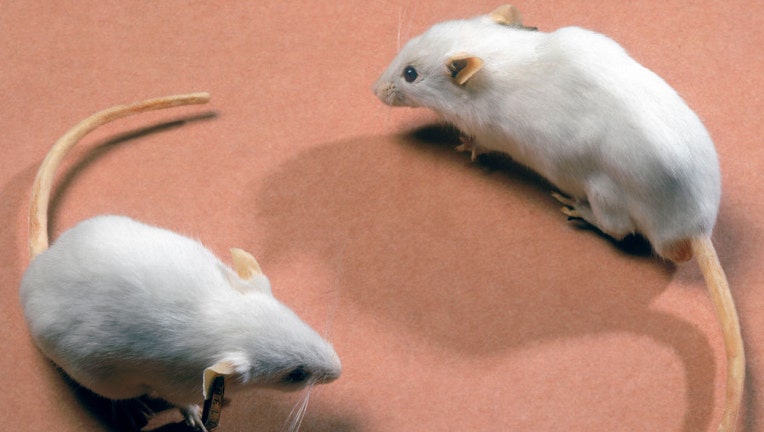
FILE-Mice are shown on a table in a laboratory. Please note these are not the mice that were tested by scientists for pancreatic cancer. This is only a file photo. (Photo by SSPL/Getty Images)
Scientists in Spain potentially made a major medical breakthrough in finding a cure for pancreatic cancer.
The team in their research found that a method called triple therapy could remove cancer in mice. Triple therapy refers to a medical treatment method that uses three different medications to bolster therapeutic effectiveness.
Scientists developed a drug-based cure for mice with pancreatic cancer in a treatment combining three drugs, known as CNIO therapy, to eliminate several tumor survival components at the same time, Newsweek reported.
Results of their findings were published in the scientific journal Proceedings of the National Academy of Sciences (PNAS).
What are the symptoms of pancreatic cancer?
Dig deeper:
Pancreatic cancer is a type of cancer that begins as a growth of cells in the pancreas, which is behind the lower part of the stomach. The most common type of pancreatic cancer is pancreatic ductal adenocarcinoma.
According to the Mayo Clinic, this form of cancer starts in the cells that line the ducts that carry digestive enzymes out of the pancreas.
RELATED: Colorectal cancer is now leading cause of death among young adults with cancer: new report
Pancreatic cancer often doesn't cause symptoms until the disease is advanced, and when this occurs, signs and symptoms of pancreatic cancer may include belly pain that spreads to the sides or back, loss of appetite, weight loss, and yellowing of the skin and the whites of the eyes, called jaundice.
How common is pancreatic cancer?
By the numbers:
According to the American Cancer Society, pancreatic cancer accounts for roughly 3% of all cancers in the United States and about 8% of all cancer deaths.
In 2026, the agency estimates in the U.S. that roughly 67,530 people (35,190 men and 32,340 women) will be diagnosed with pancreatic cancer. And about 52,740 people (27,230 men and 25,510 women) will die of pancreatic cancer.
Furthermore, the American Cancer Society adds that the lifetime risk of pancreatic cancer is about 1 in 56 in men and about 1 in 60 in women. But each individual's chances of getting this cancer can be impacted by certain risk factors like smoking, excess body weight, and people with diabetes.
The Source: Information for this story was provided by the Proceedings of the National Academy of Sciences (PNAS), American Cancer Society data, the Mayo Clinic, and Newsweek. This story was reported from Washington, D.C.