

State Department shuts down disinformation office targeting Russia, China, Iran

Trump eyes major cuts to NOAA research
The Trump Administration is considering major funding cuts to the National Oceanic and Atmospheric Administration (NOAA), raising concerns among scientists, environmental advocates and former forecasters as hurricane season approaches. FOX 13 Tampa's Evyn Moon joins LiveNOW's Christina Evans with more.
WASHINGTON - The State Department has officially shut down the Global Engagement Center, a specialized office that had worked to identify and counter foreign disinformation campaigns—particularly from governments in Russia, China and Iran.
The move, announced by Secretary of State Marco Rubio, follows growing criticism from conservative groups that the center had crossed a line by labeling certain US-based content as misinformation.
While the center’s mission was to track foreign influence operations, it occasionally called out domestic websites and social media accounts it believed were amplifying propaganda related to issues like the Russia-Ukraine war. Rubio argued this crossed into dangerous territory for free expression, prompting his decision to eliminate the office.
Why did the State Department shut down the disinformation office?
The backstory:
Rubio said the Global Engagement Center overstepped its bounds by identifying and suppressing American voices online, rather than focusing solely on foreign actors. In a statement, he said the office "worked to actively silence and censor the voices of Americans they were supposed to be serving."
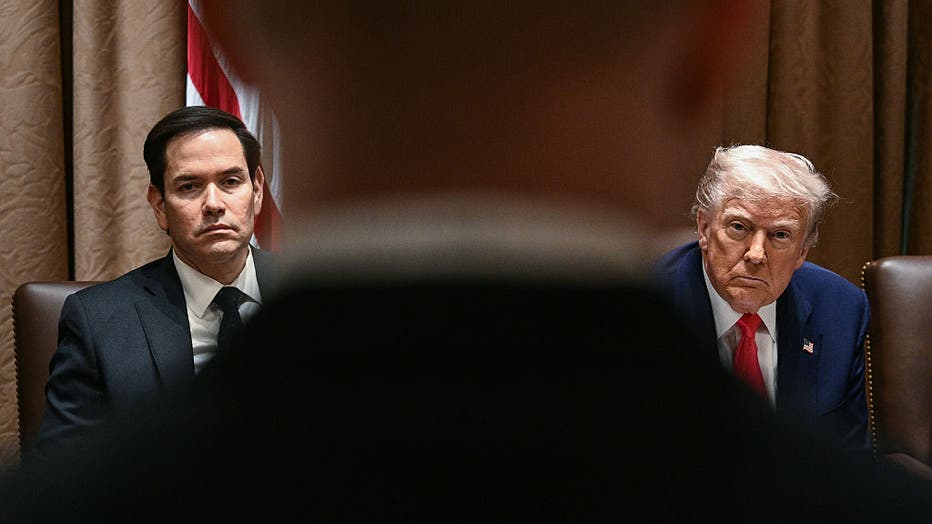
US President Donald Trump and Secretary of State Marco Rubio (L) attend a cabinet meeting in the Cabinet Room of the White House on April 10, 2025, in Washington, DC. (Photo by BRENDAN SMIALOWSKI/AFP via Getty Images)
The office had gained bipartisan support in previous years and was originally intended to track foreign propaganda. Its focus included combating Russian disinformation around the invasion of Ukraine and misleading narratives pushed by China and Iran.
But according to Rubio, its recent work identified US-based sites and social media accounts as misinformation sources, raising constitutional concerns.
What they're saying:
Secretary Rubio argued the move was necessary to protect free speech, stating, "It is the responsibility of every government official to continuously work to preserve and protect the freedom for Americans to exercise their free speech."
However, critics pushed back. Former State Department spokesman Ned Price wrote on X that the decision was "a deeply misleading (and) unserious portrayal of an organization focused on identifying foreign — primarily Russian — disinformation ops."
The closure reflects a broader political divide over how the government should engage with misinformation online.
While some see the Global Engagement Center as a needed tool against foreign interference, others say any US office flagging information—even if false—can cross the line into censorship.
The decision also comes as online propaganda campaigns by foreign adversaries continue to evolve, particularly in the lead-up to the 2024 presidential election.
What's next:
It’s unclear what will replace the Global Engagement Center’s role in tracking foreign disinformation.
With the office shuttered, there may be a gap in how the US coordinates efforts to counter foreign propaganda, particularly as bad actors grow more sophisticated in using online platforms.
The Source: This report is based on information from The Associated Press, which covered Secretary of State Marco Rubio’s decision to close the Global Engagement Center. The report includes statements from Rubio and former State Department spokesman Ned Price, along with background on the center’s history and bipartisan support. This story was reported from Los Angeles.