

US task force calls for increasing blood pressure screenings during pregnancy
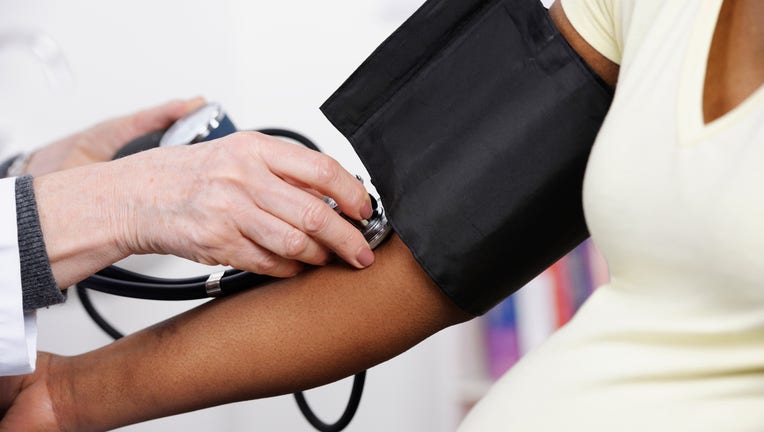
A close-up of a pregnant Black woman having her blood pressure monitored.
Anyone who is pregnant should have their blood pressure taken throughout pregnancy to better screen for hypertensive disorders, says a new recommendation this month from the U.S. Preventive Services Task Force.
The recommendation, which was published in the Journal of the American Medical Association, particularly includes those who don’t have a known history of high blood pressure or a diagnosis of hypertensive disorder of pregnancy.
Hypertension is when the pressure in your blood vessels is too high, and is common but can be serious if not treated – especially for those who are pregnant.
In fact, hypertensive disorders of pregnancy are among the leading causes of maternal morbidity and mortality in the US, the task force says, and that hypertensive disorders of pregnancy have been increasing in the country for years.
Hypertensive disorders of pregnancy include:
- Gestational hypertension, which is diagnosed when high blood pressure occurs only during pregnancy
- Preeclampsia, which is when high blood pressure suddenly develops in someone who previously had normal blood pressure
- Eclampsia, which is when someone with preeclampsia develops seizures and is a medical emergency
All are among the U.S. Centers for Disease Control and Prevention’s leading causes of serious complications and death for pregnant people in the United States.
RELATED: US employers expect to see biggest jump in healthcare costs in a decade in 2024
Screening for hypertensive disorders of pregnancy
"Pregnant people can be confident that (taking blood pressure readings) is the best evidence-based approach to screening for multiple hypertensive disorders of pregnancy, ultimately helping identify and prevent serious health issues," Dr. Wanda Nicholson, vice chair of the Task Force, told FOX Television Stations.
Serious health issues that can arise can include stroke, retinal detachment, organ damage or failure, and seizures. Complications for the baby include abnormal growth, low birth weight and stillbirth, the agency said.
The task force is hoping this recommendation highlights ways to improve health outcomes for people who are at higher risk of hypertensive disorders of pregnancy, such a Black, Native American, and Alaska Native patients, Nicholson said.
"Clinicians need to know that Black, Native American, and Alaska Native individuals are much more likely to both have and die from a hypertensive disorder of pregnancy," she said.
Nicholson noted that this is not due to differences in biology, but rather because of social inequities that come from disparities in access to care, as well as disparities in living conditions, such as education, nutrition, and income.
"While taking blood pressure throughout pregnancy is an important first step, it is not enough to improve these inequities," Nicholson noted, saying the task force’s recommendation also calls for more research on eliminating disparities in these communities.
RELATED: RSV vaccine recommended for pregnant women, CDC says
Nicholson said that anyone who screens positive should expect to receive evidence-based management of their condition to help them and their baby get and stay healthy.
The task force is an independent, volunteer group of 16 national experts in various medicinal fields and is not associated with the U.S. government.
This story was reported from Detroit.