

Astronomers discover sugar in space, offering hints to life’s origins
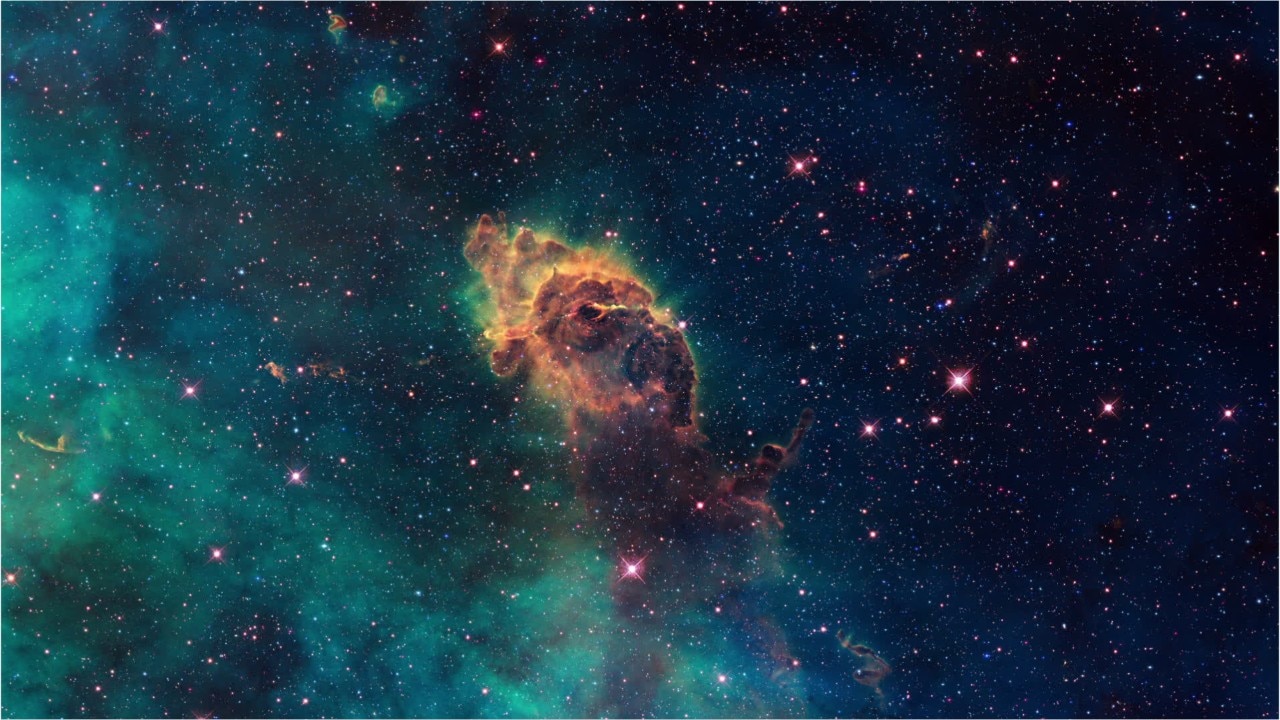
Exploding stars create half the calcium in the universe, study finds
A global team of researchers examined a supernova in its final stages of life and discovered a historically large emission of calcium.
Some may call it an extra-sweet discovery.
A group of astronomers detected a type of sugar in space that’s also found in raspberries and self-tanning cosmetics.
Astronomers find sugar in space
Big picture view:
Researchers are calling the molecule – a compound with four carbon atoms called erythrulose – the first true sugar spotted in ‘interstellar’ space.
The sugar molecule was found in the interstellar medium – inside clouds of gas and dust near the center of our galaxy.
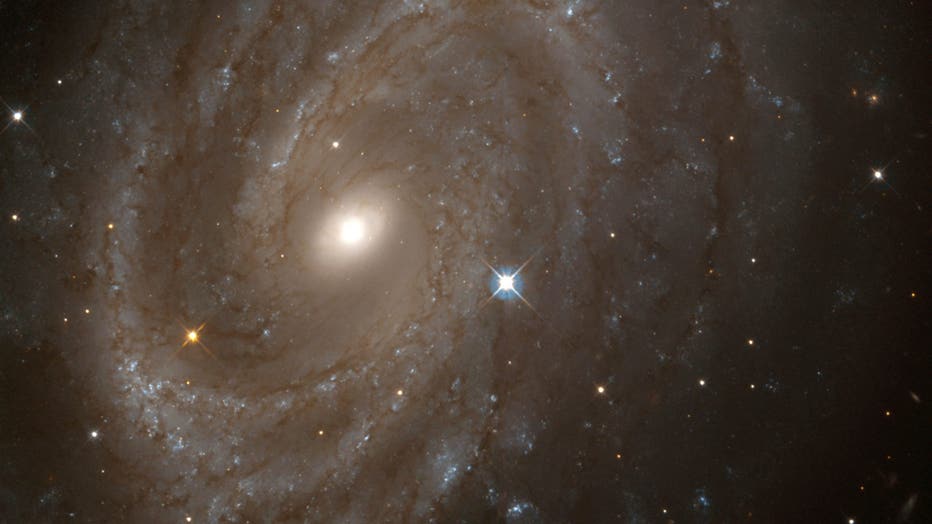
A Nasa Hubble space telescope shows the spiral galaxy Ngc 4603. (Credit: Nasa/Getty Images)
Using two dish-shaped radio telescopes in Spain, researchers collected data from a large gas cloud near the center of the Milky Way. They identified the sugar in gas form by comparing telescope signals to samples in the lab.
Findings may help clarify how life began
Dig deeper:
Researchers said the findings, published Monday in Nature Astronomy, could help clarify how life on Earth began.
While the latest sugar isn’t essential for life, it can easily convert to a form that’s thought to be crucial to kick-starting life on Earth. And it’s one of the most complex sugars spotted so far, astrophysicist Erika Hamden with the University of Arizona, told The Associated Press.
It's "a pristine example of the stuff that’s just floating out in the galaxy," said Hamden, who had no role in the new research.
RELATED: NASA finds ‘puffiest’ planets so far: ‘Comparable to cotton candy’
In the future, researchers want to look for more sugars in space and learn about how they convert to different forms.
Finding them in one spot means they're likely also hiding in distant corners of the galaxy along with other important bits, study author Izaskun Jiménez-Serra, an astrophysicist at the Center for Astrobiology in Spain, said.
"The key ingredients for the origin of life could be present in other regions across the galaxy, opening the possibility for life to develop elsewhere in the universe," Jiménez-Serra explained.
Previous hints of sugar
The backstory:
Researchers have already seen hints that sugars on Earth originated in outer space.
The five-carbon sugar ribose was previously found in some multi-billion-year-old meteorite samples, suggesting that space rocks might have smashed into Earth and delivered this and other sugars.
In 2000, astronomers also reported the detection of the two-carbon molecule glycolaldehyde – sometimes considered the simplest sugar molecule – in the interstellar space between stars.
RELATED: NASA wants to light the first fire on the moon. Here's why
Although glycolaldehyde can act similarly to a sugar, "it is not formally a sugar", Brett McGuire, an astrochemist at the Massachusetts Institute of Technology in Cambridge, said in Nature Astronomy. True sugars, he added, must have a backbone of at least three carbon atoms. Astronomers have continued to scan space for these bigger molecules ever since.
The Source
The information for this story was provided by the journal Nature Astronomy. This story was reported from Los Angeles. The Associated Press contributed.