Flood Watch
from SAT 11:00 PM MST until MON 5:00 AM MST, North Phoenix/Glendale, Aguila Valley, Mazatzal Mountains, Tonopah Desert, Gila Bend, San Carlos, East Valley, Northwest Pinal County, Northwest Valley, Southeast Valley/Queen Creek, Globe/Miami, Deer Valley, Fountain Hills/East Mesa, Apache Junction/Gold Canyon, Buckeye/Avondale, Tonto Basin, Rio Verde/Salt River, South Mountain/Ahwatukee, Dripping Springs, Southeast Gila County, Pinal/Superstition Mountains, Scottsdale/Paradise Valley, New River Mesa, Sonoran Desert Natl Monument, West Pinal County, Superior, Cave Creek/New River, Central Phoenix, Northwest Plateau, Eastern Cochise County below 5000 ft including Douglas/Wilcox, Upper Gila River and Aravaipa Valleys including Clifton/Safford, Southeast Pinal County including Kearny/Mammoth/Oracle, Western Pima County including Ajo/Organ Pipe Cactus National Monument, Dragoon/Mule/Huachuca and Santa Rita Mountains including Bisbee/Canelo Hills/Madera Canyon, Tucson Metro Area including Tucson/Green Valley/Marana/Vail, Tohono O'odham Nation including Sells, Baboquivari Mountains including Kitt Peak, Upper San Pedro River Valley including Sierra Vista/Benson, Chiricahua Mountains including Chiricahua National Monument, Galiuro and Pinaleno Mountains including Mount Graham, Santa Catalina and Rincon Mountains including Mount Lemmon/Summerhaven, White Mountains of Graham and Greenlee Counties including Hannagan Meadow, South Central Pinal County including Eloy/Picacho Peak State Park, Upper Santa Cruz River and Altar Valleys including Nogales, Yavapai County Mountains, Little Colorado River Valley in Navajo County, Western Mogollon Rim, Coconino Plateau, Yavapai County Valleys and Basins, Oak Creek and Sycamore Canyons, Grand Canyon Country, Little Colorado River Valley in Coconino County, Marble and Glen Canyons, Northern Gila County, White Mountains, Kaibab Plateau, Eastern Mogollon Rim, Little Colorado River Valley in Apache County

Brain implant restores gestures, speech for some paralysis patients through virtual avatars
Published September 14, 2026 1:24 PM MST

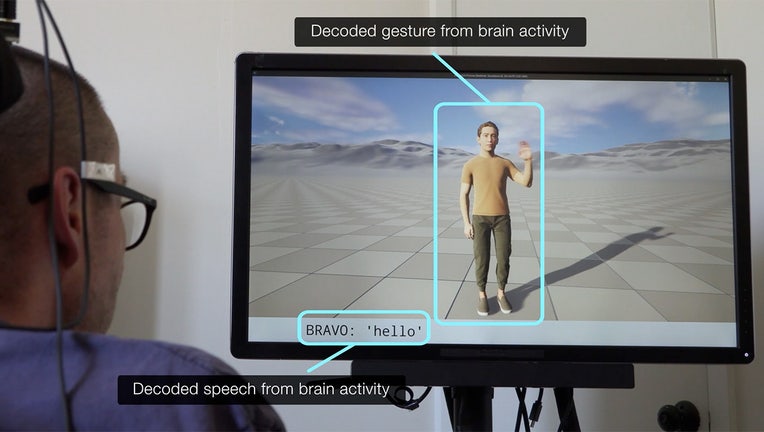
FILE - Neural activity recorded from a participant with paralysis is decoded in real time to control a personalized virtual avatar, enabling speech and gesture communication. (Chang Lab, UCSF) 

The National Institutes of Health (NIH) shared a new brain-computer interface (BCI) that allows patients who are paralyzed to convey speech and gestures at the same time. 

BCI for paralysis patients

Dig deeper:

Scientists at the University of California, San Francisco, used machine learning to read the unique brain waves that go along with speech and physical gestures in three patients, according to an NIH news release.

Using the BCI, patients were able to successfully translate their thoughts to two other participants.

What they're saying:

"Conversation is about much more than the words being spoken. It’s a multilayered, dynamic process involving the whole motor cortex," said corresponding author Edward Chang, M.D., a professor of neurological surgery at UCSF. "This proof-of-concept shows us it’s possible for a BCI to restore some of this freedom and flexibility."

Sensor implant in the brain 

With the use of electrocorticography (ECoG), a thin sensor strip implanted on the motor cortex of patients, computer models are able to decode the patient’s brain signals into a computer which controls an avatar seen on a computer screen. 

Big picture view:

In this new study, scientists discovered that the brain works differently when speaking and moving together than when doing them one at a time. By teaching computer decoders how the brain handles both actions at once, researchers can help people communicate in a much more natural, lifelike way.

What's next:

Scientists hope to test a fully implantable, wireless version for long-term use in the future. 

The Source: Information for this article was taken from a National Institutes of Health news release published on Sept. 14, 2026. This story was reported from San Jose. 

ScienceHealthTechnologyCaliforniaNews