

Key Bridge collapse probe: Cargo ship engineer admits to federal safety violation
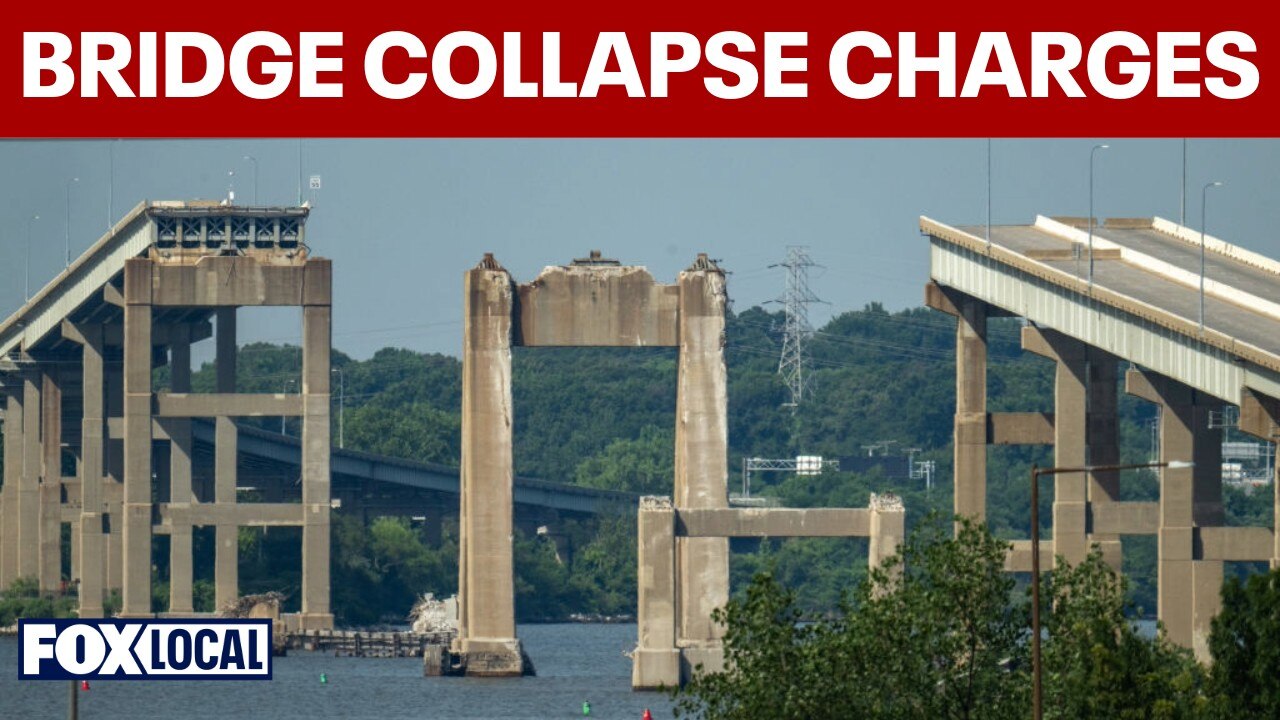
Baltimore Key Bridge Collapse: Singapore ship operator, employee charged in deadly crash
The Singapore-based operator of the cargo ship that struck Baltimore’s Francis Scott Key Bridge—causing its collapse and killing six workers—has been indicted along with a senior employee, federal prosecutors said Tuesday. FOX 5 D.C.’s Shirin Rajaee has the latest.
BALTIMORE, MD. - The chief engineer of the cargo ship Dali admitted on Thursday to a federal safety violation for not reporting a hazardous condition before a power failure led it to strike and collapse Baltimore’s Francis Scott Key Bridge in March 2024, according to federal prosecutors.
Karthikeyan Deenadayalan entered into a deferred prosecution agreement with the U.S. Department of Justice, allowing him to avoid active prosecution under the Ports and Waterways Safety Act if he complies with federal conditions.
His admission marks the latest major development in the criminal investigation into the disaster, which crippled the Port of Baltimore and disrupted East Coast maritime traffic.
According to federal court documents, Deenadayalan admitted he knew the Dali and two sister ships were operating with a high-risk fuel flushing pump that lacked a vital backup system.
This hazardous setup created a severe vulnerability, prosecutors say: if the pump failed, the vessels would lose power with no way to quickly recover, directly endangering nearby bridges and structures.
Prosecutors allege that the ship's management actively tried to conceal the flaw.
Court records detail communications where Radhakrishnan Karthik Nair—a co-defendant in a related criminal case—directed Deenadayalan to craft a "convincing" email to the ship's charterer to deflect questions about fuel consumption and hide the risky pump usage.
6 construction workers killed
The backstory:
The Francis Scott Key Bridge in Baltimore collapsed after it was struck by a large container ship – the Dali – after the vessel lost power on the morning of March 26, 2024.
Six construction workers were killed, and the Port of Baltimore was shut down for nearly three months.

NTSB on Francis Scott Key Bridge Collapse investigation
The NTSB provided updates on the findings from the Francis Scott Key Bridge collapse investigation.
Last year, the National Transportation Safety Board (NTSB) pinpointed the cause of the power outage: an electrical terminal block that was not properly connected.
The Board also said that the workers may have had time to escape if there had been a proper warning system. Additionally, the Key Bridge’s safety barriers, known as "dolphins" that protect its pilings, were reportedly far too small.
Dig deeper:
While Deenadayalan's agreement pauses his prosecution, the broader federal case continues to expand.
Last month, federal prosecutors unsealed a criminal indictment charging three separate defendants in connection with the catastrophic collision, including Nair, Synergy Maritime Pvt. Ltd. and Synergy Marine Pvt. Ltd.
The Source: Information from the United States Attorney’s Office for the District of Maryland and previous FOX 5 D.C. reporting.