

What is ‘brain rot’? Should parents be worried about bizarre AI videos captivating kids

Expert explains future of Artificial Intelligence
Vice President Kamala Harris spoke Wednesday at an Artificial Intelligence conference in London, addressing the Biden administration's plans to address concerns over A.I. Simon Wilby, the creator of 1Voice A.I. joined LiveNOW from FOX's Mike Pache to discuss the concerns and potential solutions.
In early 2025, an AI-generated ballerina with a cappuccino cup for a head racked up more than 55 million TikTok views. Known as Ballerina Cappuccina, the character sings in a deep, computer-generated male voice that mixes Italian words with gibberish.
She’s one of the leading stars of "Italian brain rot," a viral meme trend made up of surreal characters, absurdist music and storylines that don’t make sense to most adults.
The term "brain rot" itself was Oxford’s 2024 Word of the Year, defined as the dulling of one’s mind through the overconsumption of trivial or unchallenging content.
What is ‘brain rot’?
Dig deeper:
The Italian brain-rot craze began with Tralalero Tralala, a shark wearing Nike sneakers on its fins. Other creations quickly followed: a crocodile-headed airplane called Bombardiro Crocodilo, a cactus-bodied elephant named Lirilì Larilà and an armadillo stuffed inside a coconut named Armadillo Crocodillo.
Entire storylines have been built around these characters, accompanied by intentionally ridiculous songs. Some videos have gone viral overnight, reaching tens of millions of views.
The trend has also crossed into gaming. On Roblox, one of the platform’s most popular games this summer was "Steal a Brainrot," where players compete to collect characters. The competition became so heated that accusations of "admin abuse" — administrators unfairly taking characters — sent some kids into meltdowns, with viral videos showing them in tears.
Why kids are drawn to ‘brain rot’
For many young fans, the appeal is that the content makes no sense at all.
"It’s funny because it’s nonsense," Italian animator Fabian Mosele, who has created viral brain-rot videos, told the AP. "Seeing something so dark, in a way, and out of the ordinary, that breaks all the norms of what we would expect to see on TV — that’s just super appealing."
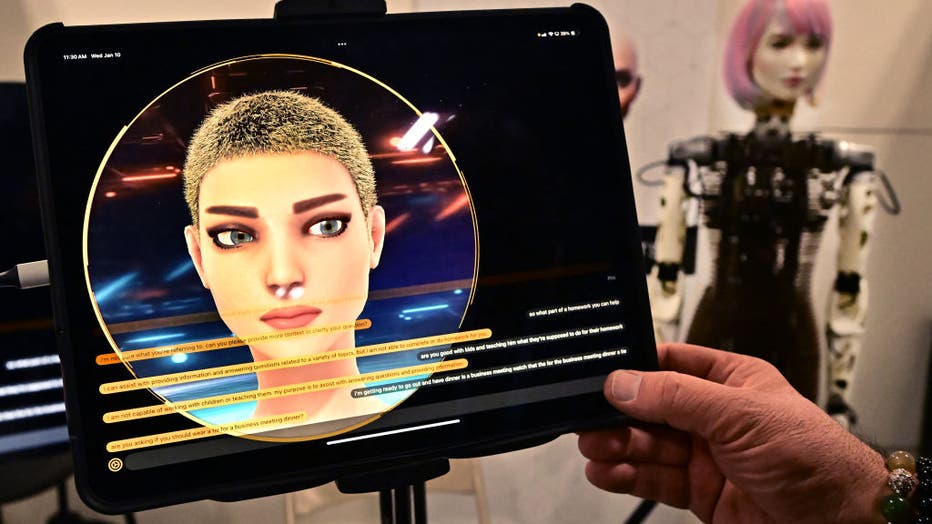
A person demonstrates an artificial intelligence-powered avatar on a tablet during a technology showcase, with a humanoid robot visible in the background. (Photo by FREDERIC J. BROWN/AFP via Getty Images)
Children’s media researcher Emilie Owens said parents often view brain rot with suspicion, much like past generations worried about comic books, television or video games.
"It’s very normal for everyone to need to switch their brains off now and again," Owens said.
The backstory:
"Brain rot" content doesn’t exist in isolation. Similar absurdist trends include the "Skibidi Toilet" animated series and the popular practice of pairing endless "Subway Surfer" gameplay videos with random TV show clips.
These videos may look meaningless to adults but serve as cultural touchstones for Generation Alpha, kids born between 2010 and 2025, who use them as shared jokes and references.
What you can do:
Experts say the main concern with "brain rot" is the amount of time children spend scrolling, not the content itself.
While some videos briefly touch on real-world issues, most are designed to be silly and absurd. Researchers note that the content itself isn’t harmful — instead, it reflects how kids are carving out their own cultural space online.
For parents, the bigger question may be about balance: understanding what kids are watching, while keeping an eye on how much time they spend with it.
The Source: This report is based on information from the Associated Press and additional reporting on social media trends and expert commentary.