

Arizona tech workforce: Gov. Hobbs expands program to more community colleges
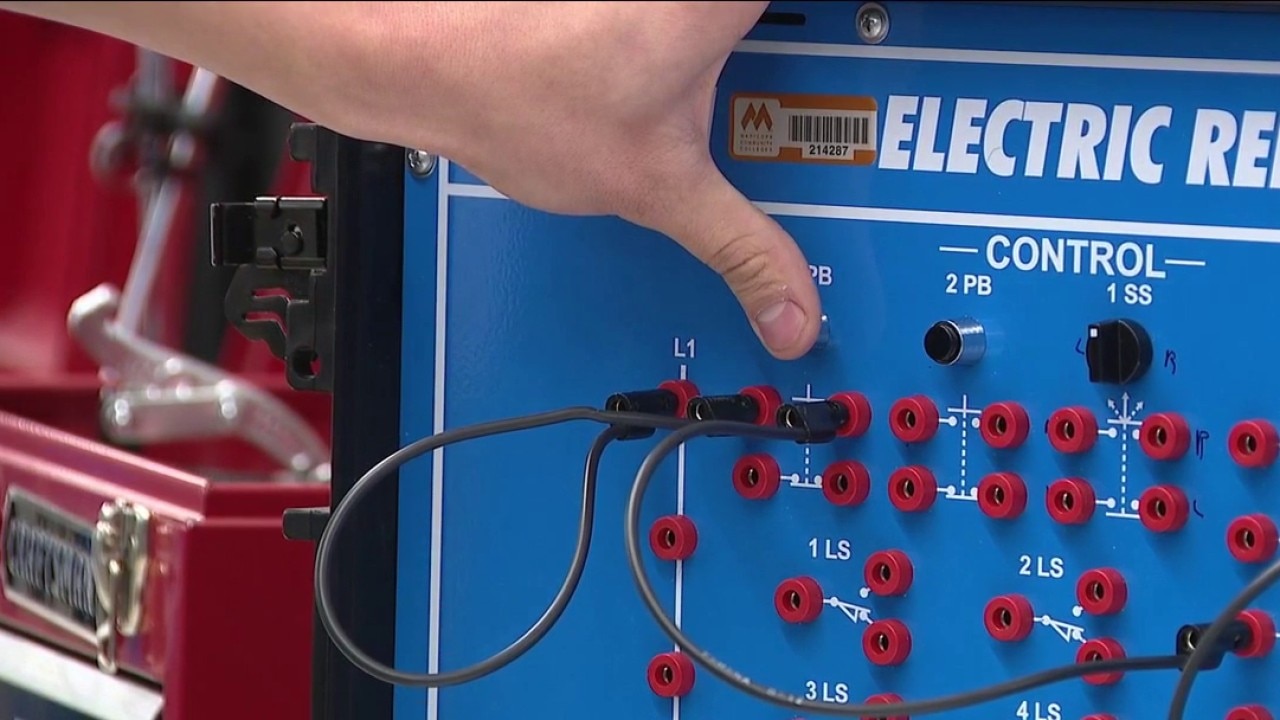
Arizona expands program to help prepare students for technology jobs
Gov. Katie Hobbs is bringing the "Ready Tech-Go" initiative to more Arizona community colleges to train workers for more than 162,000 technology jobs across the state. FOX 10's Andrew Christiansen shows us how it works.
PHOENIX - Technology jobs are expanding in Arizona. To keep that growth going, Gov. Katie Hobbs is expanding a workforce initiative to more community colleges across the state.
What we know:
The "Ready Tech-Go" program is designed to directly connect students with major employers, partnering directly with tech companies to help students find jobs after graduation. Some of those companies even sponsor them while they are in school.
Local perspective:
At Mesa Community College, their Automated Industrial Training program teaches students to become equipment and automation technicians, along with various other roles. Some of the students in the program are already in the industry looking to level up their skills.
Gustavo Ortiz recently earned his associate degree from the program at Mesa Community College.
"It was a gamechanger," Ortiz said. "I don't see myself in the position I'm in right now without the program."
Now, Ortiz works as a maintenance operator technician.
"Purely because of the connections and the experiences that I actually get with my hands-on," Ortiz said.
Big picture view:
The "Ready Tech-Go" program is already established at Pima Community College, Estrella Mountain Community College, and Central Arizona College. Now, it is expanding to Coconino Community College, Mohave Community College, and Yavapai Community College. The goal is to train workers for the more than 162,000 tech jobs in Arizona.
"A lot of people here are already in the industry, so you make connections with everyone you're doing your labs with and all your classmates," Ortiz said.
Ortiz says those connections helped him land his job. The college maintains active partnerships with major industry companies like Intel, TSMC, and Lucid.
"I really like that relationship because you get constant feedback," said Brian Kohlenberg, an automation industrial technology instructor. "They'll ask you, 'Hey, how's your student doing?' You'll tell them, 'Hey, how's this working out for you?'"
Why you should care:
Kohlenberg says faculty members tailor the curriculum based on what partner companies want their future hires to know.
"Those three to five years of skills that they get here really boost them to higher roles within their next company," Kohlenberg said.
The Utah Masonry Council is one of the educational partners that offers apprenticeships through the institution.
"The pool of students are readily available, and when you're waiting for applications to come in from just a random network, it can be very, very slow paced," Cassie Mejia, the executive director of the Utah Masonry Council, said.
Dig deeper:
For students going through the coursework, the professional benefits remain high across various technical sectors.
"Everything needs to be made, so if you really have an area you want to work, you can work really hard and get there," Ortiz said.
By the numbers:
Program coordinators try to partner students with jobs where they earn at least $30 an hour. With the technical skills learned in the program, graduates can earn anywhere from $46,000 to $100,000 annually, and up to $180,000 for highly specialized roles.
The Source: Information was gathered from a recent graduate from the program at Mesa Community College, an Automation Industrial Technology instructor, and the Utah Masonry Council Executive Director.