

Flu, COVID-19 infections rising, could worsen over holidays, CDC says
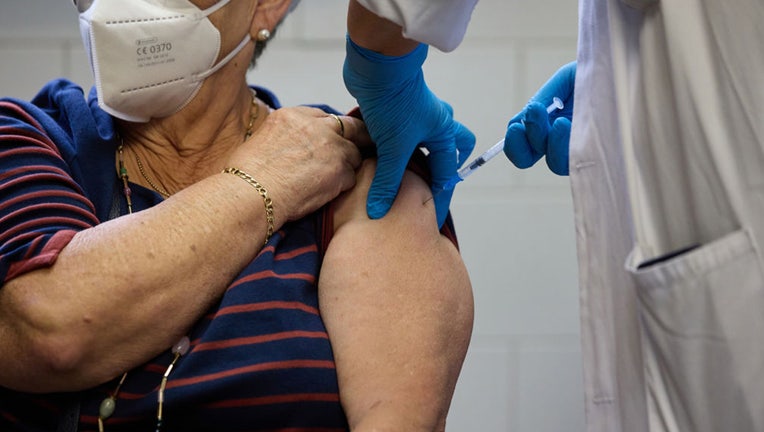
FILE - A nurse vaccinates a woman at the Alameda de Osuna Health Center, on Oct. 17, 2022 in Madrid, Spain. (Jesus Hellin/Europa Press via Getty Images)
NEW YORK - Look for flu and COVID-19 infections to ramp up in the coming weeks, U.S. health officials say, with increases fueled by holiday gatherings, too many unvaccinated people and a new version of the coronavirus that may be spreading more easily.
High levels of flu-like illnesses were reported last week in 17 states — up from 14 the week before, the Centers for Disease Control and Prevention said Friday.
"Folks are traveling a lot more this season. They want to see their families," said the CDC's Dr. Manisha Patel. "And all of that sort of adds to the mix" in the spread of viruses.
Health officials are keeping an eye on a version of the ever-evolving coronavirus, known as JN.1. The omicron variant was first detected in the U.S. in September and now accounts for an estimated 20% of cases. The CDC expects it to reach 50% in the next two weeks, Patel said.
RELATED: JN.1 COVID-19 variant: What to know about the latest virus strain
It may spread easier or be better at evading our immune systems, but there is no evidence that the strain causes more severe disease than other recent variants, health officials say. And current evidence indicates vaccines and antiviral medications work against it.
As for flu, early signs suggest current vaccines are well-matched to the strain that is causing the most illnesses, and that strain usually doesn't cause as many deaths and hospitalizations as some other versions.
But the bad news is vaccinations are down this year, officials say. About 42% of U.S. adults had gotten flu shots by the first week of December, down from about 45% at the same time last year, according to the CDC.
Americans have also been slow to get other vaccinations. Only about 18% have gotten an updated COVID-19 shot that became available in September. At nursing homes, about a third of residents are up to date with COVID-19 vaccines.
And only 17% of adults 60 and older had received new shots against another respiratory virus. RSV, respiratory syncytial virus, is a common cause of mild coldlike symptoms but it can be dangerous for infants and older people.
The CDC last week took the unusual step of sending a health alert to U.S. doctors urging them to immunize their patients against the trio of viruses.
The Carolinas are currently seeing the heaviest traffic for respiratory infections in emergency rooms, according to CDC data posted this week.
It's not as dire as some past winters, but some patients are still waiting days to get a hospital bed, noted Dr. Scott Curry, an infectious diseases specialist at the Medical University of South Carolina in Charleston.
"We've barely been cold in South Carolina, and flu tends to hit us very hard when people actually get some cold weather to deal with," he said. "We could get worse, very easily, in the next four to eight weeks."
___
The Associated Press Health and Science Department receives support from the Howard Hughes Medical Institute’s Science and Educational Media Group. The AP is solely responsible for all content.