

JN.1 COVID-19 variant: What to know about the latest virus strain

FILE - COVID-19 Coronavirus molecule, March 24, 2020. (CDC/API/Gamma-Rapho via Getty Images)
The latest COVID-19 variant of interest, JN.1, has been found in several countries across the world, including the United States.
Health officials said that while the variant is spreading rapidly, there is no evidence that JN.1 presents an increased risk to the public’s health.
The U.S. Centers for Disease Control and Prevention and the World Health Organization noted that while this particular variant shouldn’t cause the public to panic, it is expected that cases of COVID-19 will increase during the winter months.
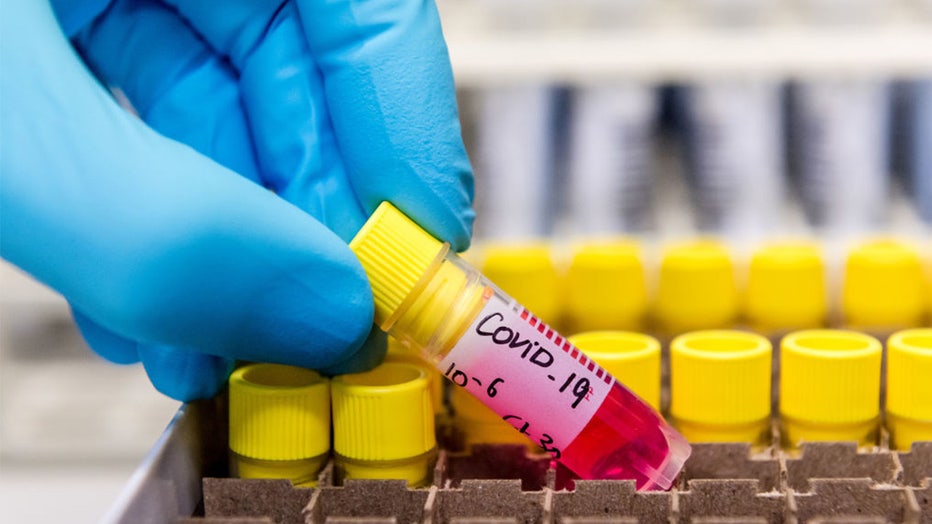
FILE - A laboratory worker places a test tube containing a patient's sample into a box during coronavirus detection tests in the virology research labs at UZ Leuven university hospital in Leuven, Belgium. (Geert Vanden Wijngaert/Bloomberg via Getty Images)
What is the JN.1 COVID-19 variant of interest?
JN.1 is closely related to the BA.2.86 variant, which the CDC has been tracking since August.
JN.1 is a sub-variant of the omicron strain and was first detected in the U.S. in September 2023.
How common is JN.1 in the U.S.?
As of Dec. 8, the JN.1 variant of interest makes up an estimated 15%-29% of cases in the U.S., according to the CDC.
Will the new COVID-19 vaccine protect against JN.1?

FILE - An employee prepares a dose of Comirnaty Omicron XBB 1.5 Pfizer vaccine for COVID-19 at a pharmacy in Ajaccio, on Oct. 5, 2023. ( PASCAL POCHARD-CASABIANCA/AFP via Getty Images)
Yes.
Since JN.1 is a sub-variant of the omicron COVID-19 strain, the latest vaccine should protect against it. The updated vaccine formula was designed to protect against the omicron variant.
Early lab data showed that people who received the latest COVID-19 shot this year showed evidence that it blocks the JN.1 virus from entering cells, according to the CDC.
This story was reported from Los Angeles.