

K-beauty products: Tariffs threaten Asian skincare boom in US

President Trump speaks with UK PM Starmer in Scotland
President Trump met with British Prime Minister Keir Starmer at one of Trump's golf courses in Scotland on Monday. Trump and Starmer discussed a variety of topics include the Ukraine-Russia war, the latest with Israel and Hamas, as well the pardoning of Ghislaine Maxwell. "Well, I’m allowed to give her a pardon, but nobody’s approached me with it," said Trump said during the bilateral meeting.
LOS ANGELES - The K-beauty industry, long beloved by American consumers for its innovative products and accessible price points, is now facing an uncertain future in the U.S. as a looming 25% tariff threatens to disrupt imports from South Korea.
With the Aug. 1 deadline set by President Donald Trump fast approaching, retailers and consumers are preparing for potential price hikes—and in some cases, holding off on new orders altogether.
Why are K-beauty imports under threat?
The backstory:
While electronics and vehicles make up the bulk of South Korea’s exports to the U.S. by value, cosmetics have quietly become one of its biggest cultural exports. According to Euromonitor data, South Korea shipped more skin care and beauty products to the U.S. in 2024 than any other country—including France, home to giants like L’Oréal and Chanel.
The U.S. imported $1.7 billion in South Korean cosmetics last year, a 54% increase from 2023, according to the U.S. International Trade Commission.
That growth may slow down significantly if South Korea is unable to secure a new trade agreement before the deadline. While countries like Japan and Indonesia have already reached deals to reduce their proposed tariffs, South Korea has not.
Since 2012, South Korean cosmetics have entered the U.S. tariff-free under a free trade agreement. But without an updated deal, many products could soon be hit with a 25% import tax.
What we know:
Here’s what’s confirmed so far about the pending tariff and how it could impact the K-beauty industry:
- A 25% tariff on South Korean goods is set to begin Aug. 1 under Trump’s latest trade plan.
- Japan and others negotiated lower rates, but South Korea has not reached a new agreement.
- Korean cosmetics currently enter the U.S. duty-free under a 2012 trade pact.
What we don't know:
Still, several important questions remain unanswered as the deadline approaches:
- Whether a last-minute deal will be struck to avoid or reduce the tariff.
- How many brands or retailers will raise prices—or discontinue products entirely.
- If smaller e-commerce shops will shift sourcing strategies to stay afloat.
How retailers and consumers are responding
What they're saying:
Winnie Zhong, a manager at Senti Senti, a boutique and e-commerce beauty retailer in New York, told the Associated Press they saw "panic buying" when tariffs were first announced, though demand has cooled since the president’s temporary 90-day pause.
"I’m not really sure where the direction of K-beauty will go to with the tariffs in place, because one of the things with K-beauty or Asian beauty is that it’s supposed to be accessible pricing," Zhong said.
Sue Greene and Herra Namhie, co-owners of Ohlolly, an online shop focused on Korean skincare, told the AP they had paused restocks due to cost uncertainty. "I don’t think we can handle 25%," Namhie said, adding that the business only has two to four months of inventory on hand.
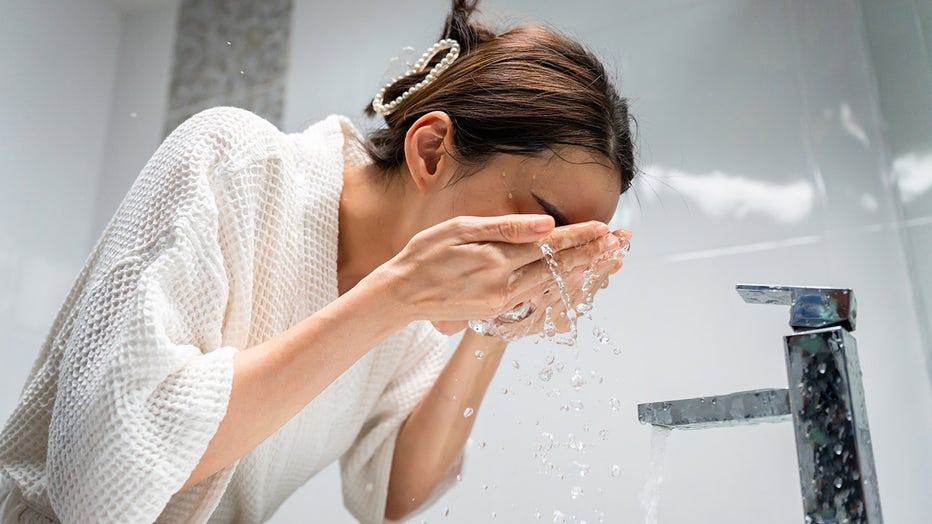
(File: Kiwis / iStock / Getty Images Plus)
Consumers are adjusting too. Amrita Bhasin, a 24-year-old from California, told the AP she bought 50 sheet masks in bulk from brands like U-Need and MediHeal to last her a few months. "If prices will go up, I will not shift to U.S. products," she said. "For face masks, I feel there are not a ton of solid and reliable substitutes in the U.S."
Content creator Jen Chae, who has over 1.2 million YouTube subscribers, told the AP she paused purchases from YesStyle.com after the announcement, unsure whether import taxes would apply to her creator packages.
Big picture view:
K-beauty is more than a niche—it’s part of a wider wave of South Korean cultural influence that includes music, film and television. As Mary Lovely, a senior fellow at the Peterson Institute for International Economics, told the AP: "It’s all part and parcel really of the same thing. And it can’t be completely stopped by a 25% tariff, but… it’s hard to see how it won’t influence how much is sold in the U.S."
Lower-cost Asian beauty brands have attracted global attention with cutting-edge ingredients and multi-step skin care routines. But if import costs go up, accessibility could vanish—and retailers may shift away from riskier SKUs altogether.
Even longtime fans like beauty writer Rachel Weingarten are weighing their options. "Maybe one or two products, but natural oils, vulnerable packaging and expiration dates mean that your products could go rancid before you can get to them," she told the AP, advising against stockpiling.
Still, Weingarten says she’ll continue to support K-beauty products: "I’d still indulge in my favorites, but am always looking for great products in general."
What's next:
Unless a new deal is reached, the 25% tariff on South Korean beauty products will take effect Aug. 1. Retailers are expected to reevaluate product lines, potentially raise prices, or cut back on new orders altogether.
The long-term impact may depend on whether Korean brands absorb the costs or pass them on to consumers—and whether loyal customers are willing to pay.
The Source: This article is based on reporting from the Associated Press, including interviews with retailers, beauty experts, and market researchers. Data was sourced from the U.S. International Trade Commission and Euromonitor. Additional context was provided by the Peterson Institute for International Economics.