

Man stung by bees more than 100 times while hiking Phoenix trail

Hiker critically hurt after being stung 100+ times on Phoenix trail
A hiker was airlifted from Lookout Mountain in north Phoenix after a swarm of bees left him in critical condition with over 100 stings. FOX 10's Jacob Luthi learns more about the rescue, and what you can do if you encounter a bee colony.
PHOENIX - A man who was stung more than 100 times by bees is in critical condition after he was rescued off a Phoenix mountain trail Saturday morning.
What we know:
Around 10 a.m., crews responded to Lookout Mountain in north Phoenix for reports of a hiker stung multiple times by bees near the summit of the mountain. The man told officials he was stung and couldn't continue his descent.
Crews used Phoenix Firebird 10 to airlift the hiker off the mountain. He was taken to a nearby hospital in critical condition.
What Experts Are Saying:
"The venom kind of goes in and it kind of crushes your muscle. And that muscle breakdown can cause all these problems," Dr. Frank Lovecchio, an emergency physician and ASU professor, said.
Dr. Lovecchio said due to the highly aggressive nature of Arizona's bees, it's not uncommon for someone to receive hundreds of stings in an encounter.
"It's always about protecting the queen bee, protecting the hive," he said. "And it sends signals that the other bees come over and kind of attack you."
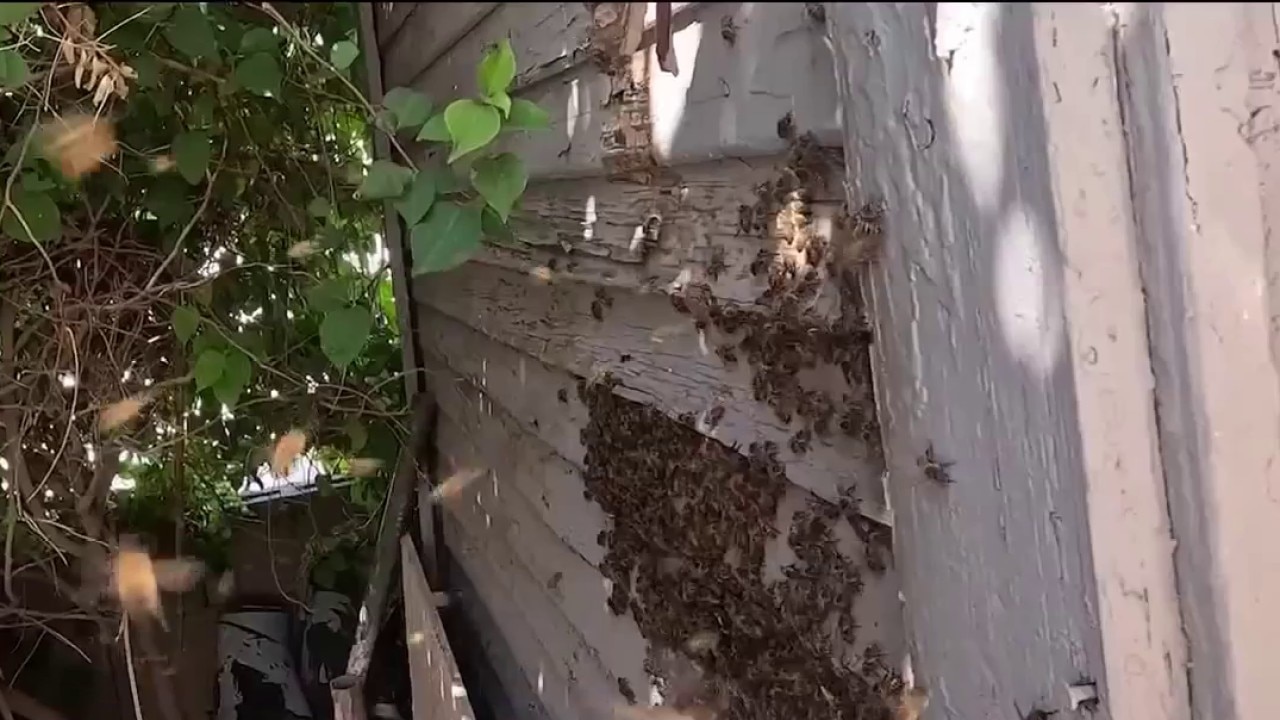
Experts warn of aggressive bees after hiker gets stung 100+ times
After a hiker was hospitalized in critical condition due to a bee attack, experts are warning that bees have become increasingly aggressive. FOX 10's Jacob Luthi learns more on how to stay safe while outdoors.
Dig deeper:
Busy Bee Pest Solutions has completed more than 150,000 bee removals in the Valley.
"We do between 60 and 70 services a day," owner Shaun Cutrona said.
Africanized bees have been a problem in Arizona since their arrival in the 1990s. Even minor disturbances can spark swarms, endangering people, pets and livestock.
"I know people love to say that bees are super friendly, but in Arizona, with them being Africanized, if you see them going in and out of a hole or cavity, don't walk up to it— call a professional," he said.
The company's busy season usually starts the first week of April, but this year, it got underway earlier than expected.
"The season's been very different for us. It seems like every colony is much larger, much more aggressive," Cutrona said.
Local perspective:
"Over here, I know, over here is a big problem," one hiker said. "Definitely overabundance. And we need them to pollinate, of course, but, definitely something to look out for, too, because there is a lot of people that are allergic."
"Right now I can feel and hear the buzzing right here," hiker Raven Thacker said. "I definitely see them, especially right now. It's springtime. They're all out, but I don't fear them. Just because I feel like if you leave them alone, and you're not carelessly walking and going to places where they're nesting, they'll probably leave you alone. But that's maybe not always the case."
What you can do:
If you encounter a bee colony, Phoenix Fire advises people to never disturb or throw rocks at a hive, wear lightly colored clothing, avoid wearing scents when hiking or working outside, and to run and cover your head.
"Keep your mouth shut, cover your mouth, and run as fast as you can," Dr. Lovecchio said.
The Source: This information was provided by the Phoenix Fire Department, an emergency physician and a pest control service owner.