

What is a Kelvin wave? How underwater phenomena impacts sea levels during El Niño
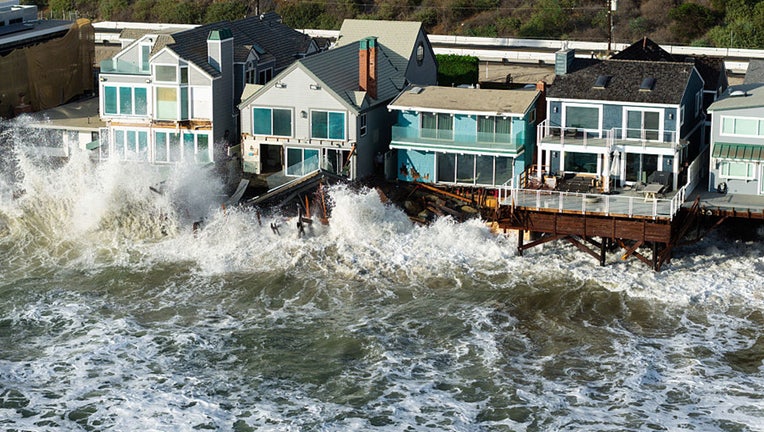
FILE - An aerial of homes along damaged by flooding along Beach Road on Tuesday, Sept. 8, 2026 in Dana Point, CA. Homes in the Capistrano Beach community have been severely damaged from recent storms. (Kayla Bartkowski / Los Angeles Times via Getty I
As the West Coast prepares to be inundated by a Kelvin Wave as a result of El Niño, here’s what you should know about the oceanic phenomenon.
What is a Kelvin Wave?
Dig deeper:
Unlike a typical wave you save on the surface of the water, Kelvin waves travel underwater and typically only occur during El Niño.
Kelvin waves happen when bursts of westerly winds push warm water eastward. This then generates Kelvin waves that travel beneath the water’s surface along the equator.
As a Kelvin wave reaches Central and South America, its energy can turn northward and travel along the coastline as a coastally trapped wave. This oceanic connection can carry El Niño’s influence from the tropics toward the West Coast, including California and the Pacific Northwest, according to the National Oceanic and Atmospheric Administration.
These waves also fall into the category of "planetary waves," a.k.a., they’re huge.
Kelvin waves can span thousands of miles, sometimes even stretching over a large portion of the Pacific Ocean.
Kelvin waves and increased flood risk
Why you should care:
These waves can deepen the thermocline, which is the line in a large body of water where the temperature dramatically drops.
When this happens, the upper ocean temperatures rise and has the potential to raise coastal sea levels.
And despite these effects being temporary, rising sea levels on low-lying shorelines is never a good thing.
It could worsen high-tide flooding and allow storm-driven waves to push farther inland.
Where could it impact?
Local perspective:
These impacts typically begin in the waters off Baja California and Southern California before working their way north along the West Coast toward Northern California, Oregon and Washington.
The Source: Information for this article was taken from FOX Weather and the NOAA website. This story was reported from San Jose.