

Christmas tree syndrome could trigger your allergies or asthma
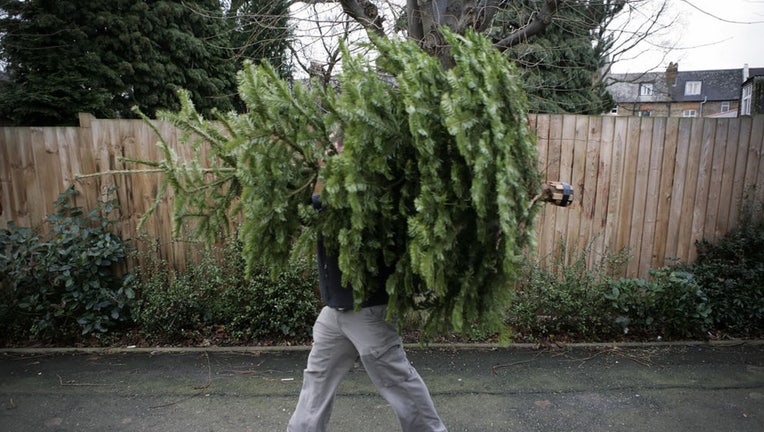
FILE - A man carries a Christmas tree. (Leon Neal/AFP via Getty Images)
You might think that’s Jack Frost nipping at your nose, but it could actually be a sign of Christmas tree syndrome.
Anyone who may experience a sudden allergic reaction once those Christmas trees enter the home could be experiencing Christmas tree syndrome.
The cause of this allergic reaction can spawn from real trees, artificial trees and even decorations.
The syndrome isn’t necessarily triggered by the actual tree or decorations themselves but from the dust, pollen or mold that sticks to them.
A study conducted in 2011 found that small samples from real Christmas trees showed there were about 50 different types of mold on them, many of which caused hayfever-like symptoms, according to the American Christmas Tree Association.
Depending on how severe your allergies are, it may simply be an annoyance. But, for those who may suffer from severe allergies or asthma, it could turn into a real medical emergency.
To avoid that this holiday, here are some preventative measures to take when decorating your home.
Clean your tree
If you're electing to buy a real tree this year and know you have allergies, be sure to hose it down before bringing it into the house.
Rinsing the tree will help wash off any allergens, according to the National Asthma Council of Australia.
If you still experience allergy or asthma symptoms after hosing down your tree, it’s best to move it outside.
Artificial trees
Unfortunately, fake trees aren’t allergen-proof.
Be sure to give your artificial tree a good shake outside before setting it up. The same goes for your other decorations.
Even if they’ve been sitting in a box somewhere in the attic, garage or closet, wiping down your decorations can reduce your chances of experiencing allergic reactions.

FILE - Traditional Christmas tree and decorations. (S. Barth /ClassicStock/Getty Images)
Consider a non-allergenic tree
Pine allergies aren’t very common, but they do exist, according to UCLA Health.
So if you’re dead-set on having a real tree this holiday, consider a non-allergenic alternative such as the Leyland Cypress tree. This tree is considered a "sterile hybrid tree" and does not produce any pollen, UCLA Health said.
This type of tree is unfortunately not very common so, if you elect to do this, you might need to do some searching.
Properly store your tree and decorations
Once the holidays are over, make sure to properly store them where they can’t accumulate any allergens.
Using plastic coverings such as bubble wrap or even vacuum-sealed bags could make all the difference when it comes to preventing allergens from sticking to your decorations and tree.
This story was reported from Los Angeles.