

Wildfire smoke chokes skies in Midwest and Northeast
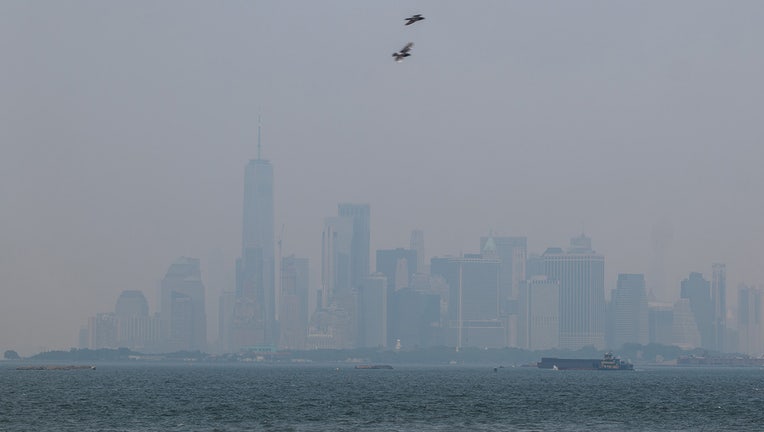
Haze from Canadian wildfires blankets the Manhattan skyline as seen from a Brooklyn pier on July 15, 2026 in New York City. (Photo by Spencer Platt/Getty Images)
Smoke from wildfires in Canada and Minnesota is blanketing multiple northern states with smoke and ash, leaving millions of people exposed to dangerous levels of air pollution.
Air quality warnings were issued across the Midwest and Northeast, spanning from Minnesota to New England, as winds continue to blow the smoke from over 100 wildfires in Canada south-east into the U.S.
The recent hot spell is only compounding the problem. On Wednesday, the high temperature in Minneapolis was expected to reach 96 degrees and remain in the 90s for the rest of the week.
"A perfect storm"
The backstory:
Firefighters in the U.S. have been dealing with a busy and deadly wildfire season. Currently, approximately 50 wildfires are burning in 15 states, from California to Minnesota to North Carolina, the National Interagency Fire Center reports.
Columbia University Climate School Assistant Professor Dan Westervelt attributed the fires to severe drought conditions, saying they have created "a perfect storm for really dry conditions to provide a lot of fuel for these wildfires to burn."
In addition to the prolonged drought, record-low snowpack levels are being blamed for helping spur so many blazes. Wildfires have burned more than 5.678 million acres, which is greater than the area of Yellowstone and Grand Canyon national parks combined.
What's next:
Minnesota officials expect large fires to burn for months. While Minneapolis is gripped by hot weather this week, many there are looking forward to the benefits of winter weather returning.
"It could well be we’re having significant fires throughout the summer until we have snow. Snow would be a good thing," said Patty Thielen, director of the state Department of Natural Resources.
Right now, people in Minnesota and Wisconsin are being warned about air quality concerns for the next few days. By Thursday, the smoke could work its way as far south as Washington, D.C.
What you can do:
To protect themselves from all the dangerous particles in the air – and to beat the heat – National Weather Service meteorologist Tyler Hasenstein says the best advice is to stay indoors.
The Source: Information for this article was taken from The Associated Press. This story was reported from Orlando.